Precision Stamping

High-accuracy metal components produced with tight tolerances, repeatability, and scalable production efficiency.

0.005mm

Tolerance Precision

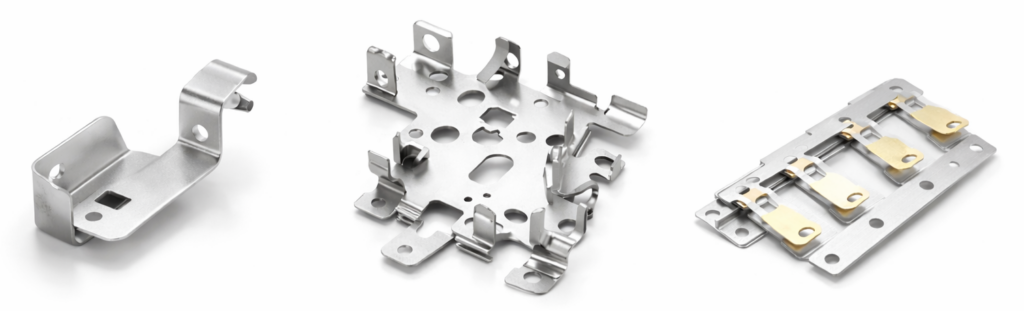
Precision stamping is a manufacturing process used to produce highly accurate metal components with consistent dimensions and repeatable quality. At PrecisionX Manufacturing, our precision stamping capabilities are designed for applications that cannot tolerate variation — including aerospace, medical, electronics, defense, and high-reliability industrial products. Using engineered tooling and controlled press operations, we manufacture parts that meet exact specifications while maintaining production efficiency at both medium and high volumes.

Unlike general metal stamping, precision stamping focuses on tight tolerances, material control, and process repeatability. Every part must come out identical to the last. Our engineering team evaluates material thickness, grain direction, burr control, and forming stresses to ensure each component maintains structural integrity and dimensional accuracy. This allows customers to rely on stamped components that assemble correctly, perform reliably, and meet regulatory and performance requirements.

Our precision stamping process supports a wide range of materials including stainless steel, copper alloys, nickel alloys, aluminum, and specialty metals. We utilize progressive dies, compound tooling, and high-precision presses to form complex geometries, small features, and intricate profiles. Many components we produce contain small holes, formed tabs, electrical contact features, or tight edge conditions that require both precision tooling and controlled process monitoring.

In addition to part production, our precision stamping services include tooling design, prototyping, and production optimization. By developing the stamping process alongside the product design, we help customers reduce secondary operations, minimize material waste, and improve long-term production stability. The result is a scalable manufacturing solution that maintains accuracy while controlling cost over the lifecycle of the product.

Precision Stamping FAQ

Precision stamping is a metal forming process that uses engineered dies and controlled press equipment to produce metal parts with very tight tolerances and consistent repeatability. It is used when components must meet strict dimensional and performance requirements.

Standard metal stamping focuses primarily on shaping metal, while precision stamping emphasizes tight tolerances, repeatability, and controlled material behavior. Precision stamping ensures each part is nearly identical, making it suitable for critical applications.

Precision stamping is commonly used in aerospace, medical devices, electronics, electrical connectors, defense components, automotive systems, and industrial equipment where accuracy and reliability are essential.

Precision stamping supports stainless steel, aluminum, copper alloys, brass, nickel alloys, and other engineered metals depending on the application and performance requirements.

Precision stamping can achieve extremely tight tolerances, often within a few thousandths of an inch, depending on material thickness, geometry, and tooling design.

Yes. Precision stamping is ideal for medium-to-high volume production because once the tooling is built, parts can be produced rapidly with consistent quality and lower per-piece cost.

Yes. Using progressive dies and engineered tooling, precision stamping can produce parts with intricate features, formed sections, tabs, and fine details without requiring extensive machining.

Many parts can be designed to minimize or eliminate secondary operations. However, additional processes such as plating, heat treating, or deburring may be included depending on the application.

Progressive Die FAQ

Progressive die stamping is a manufacturing process where a strip of metal moves through a series of stations inside a single die. Each station performs a different operation, and a finished part is produced with every press cycle.

A coil of metal feeds into a stamping press. As the press cycles, the metal advances through multiple tooling stations that pierce, cut, and form the part step-by-step until the completed component is separated from the strip.

Progressive die stamping offers high production speed, consistent quality, reduced handling, minimal secondary machining, and lower per-piece cost for higher volume manufacturing.

: Progressive die stamping is ideal for medium-to-high production volumes, complex parts, tight tolerances, and components that require repeatability and consistent performance.

Common parts include electrical terminals, connectors, clips, brackets, contacts, shields, springs, and small mechanical components used in electronics, aerospace, medical, and industrial products.

Stainless steel, copper alloys, brass, aluminum, phosphor bronze, nickel alloys, and other engineered metals can be used depending on application requirements.

Yes. Although tooling requires upfront investment, progressive die stamping greatly reduces per-part cost over long production runs due to high speed and minimal labor handling.

Many secondary processes can be reduced or eliminated because forming, piercing, and shaping occur within the same die. Some parts may still require plating, heat treating, or finishing depending on performance requirements.

With proper tooling and process control, progressive die stamping can maintain tight tolerances and consistent part dimensions across large production quantities.

Progressive Die Stamping

High-volume precision manufacturing using continuous metal forming and multi-stage tooling.

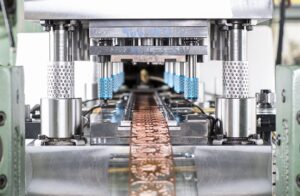
Progressive-Die-Heavy-StampingProgressive die stamping is a high-efficiency metal manufacturing process that produces finished components through a continuous sequence of forming, cutting, and shaping operations within a single press. At PrecisionX Manufacturing, our progressive die stamping capabilities allow us to manufacture complex parts at high speeds while maintaining tight tolerances and consistent quality. Each time the press cycles, the material advances through multiple stations, and a completed part is produced at the end of the die.

The advantage of progressive die stamping is repeatability and scalability. Instead of moving parts between multiple machines, the material strip moves through engineered tooling that performs multiple operations in one continuous process. Holes are pierced, edges are trimmed, features are formed, and profiles are cut progressively as the material advances. This method significantly reduces handling, minimizes variation, and improves overall production efficiency for medium- and high-volume applications.

Our engineering team designs and builds tooling specifically optimized for progressive die stamping, taking into account material properties, part geometry, forming stresses, and burr control. We carefully analyze strip layout, feed progression, and station sequencing to ensure stable production and long tool life. By controlling each stage of the process, we can produce intricate features, tight hole locations, and consistent formed components without requiring extensive secondary machining.

Progressive die stamping is particularly well suited for electrical contacts, connectors, clips, terminals, brackets, and small mechanical components where precision and repeatability are critical. We work with a variety of metals including stainless steel, copper alloys, aluminum, and specialty materials. By combining precision tooling with controlled press operation, PrecisionX Manufacturing delivers reliable parts while keeping per-piece cost low for long production runs.
Sheet Metal Stamping Dies

Engineered tooling designed for accuracy, repeatability, and long-term production performance.

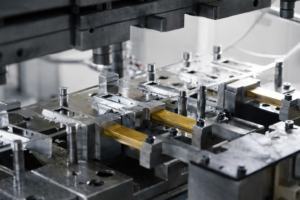
Sheet metal stamping dies are the precision tools that make metal stamping possible. At PrecisionX Manufacturing, we design and build sheet metal stamping dies that produce consistent, repeatable components across long production runs. Every stamped part is only as accurate as the die used to form it, which is why tooling engineering is a critical part of our manufacturing process. Our in-house tooling expertise allows us to control part quality, dimensional accuracy, and long-term production stability.

A sheet metal stamping die contains the cutting and forming features that shape flat metal into a finished component. During stamping, the die guides the material, punches holes, trims edges, and forms bends while maintaining alignment and tolerance. We carefully engineer die clearances, punch geometry, and forming radii based on material thickness and properties. This ensures clean edges, controlled burr height, and consistent part geometry throughout the life of the production program.

PrecisionX Manufacturing develops sheet metal stamping dies for progressive die stamping, compound die operations, and specialty forming applications. Our tooling engineers analyze strip layout, material flow, and stress distribution to prevent distortion and improve tool longevity. Proper die design reduces scrap, improves cycle efficiency, and minimizes secondary operations such as machining or rework.

Because many stamped components are used in high-reliability applications, sheet metal stamping dies must maintain performance over millions of press cycles. We incorporate hardened tool steels, wear-resistant surfaces, and maintenance-friendly designs that allow long production runs without sacrificing accuracy. By controlling the tooling from the beginning, we help customers achieve stable production, predictable lead times, and consistent part performance.

Metal Stamping FAQ

A sheet metal stamping die is a precision tool installed inside a stamping press that cuts, shapes, and forms metal into a specific part. It determines the final geometry and accuracy of the stamped component.


The die controls part dimensions, hole locations, edges, and formed features. A well-engineered die ensures repeatable quality, while a poorly designed die can cause variation, burrs, and production instability.

Common types include progressive dies, compound dies, forming dies, and blanking dies. The type depends on the complexity of the part and the production volume required.

Properly designed and maintained sheet metal stamping dies can last millions of cycles. Tool life depends on material type, part complexity, press conditions, and maintenance schedules.

Yes. Although dies require an upfront investment, they allow parts to be produced quickly and consistently, reducing per-part cost in medium and high-volume production.

Yes. Each sheet metal stamping die is custom engineered for a specific part design, material, and production requirement.

Yes. Advanced die design allows the creation of intricate features such as small holes, formed tabs, bends, and detailed profiles without machining.

Stamping dies are typically made from hardened tool steels or wear-resistant alloys that can withstand repeated press cycles and metal forming forces.

Routine maintenance such as sharpening punches, adjusting clearances, and inspecting wear surfaces helps ensure consistent part quality and long tool life.

Yes. Although dies require an upfront investment, they allow parts to be produced quickly and consistently, reducing per-part cost in medium and high-volume production.

Metal Stamping FAQ

Metal stamping dies are custom tools installed inside a stamping press that cut and form metal into a specific shape. They define the size, features, and accuracy of the finished stamped part.

A metal stamping die holds punches and forming surfaces. As the press closes, the die pierces, trims, or forms the metal sheet or strip to create the desired component.

Yes. Each metal stamping die is engineered for a specific part design, material type, thickness, and production volume.

With proper design and maintenance, metal stamping dies can operate for hundreds of thousands to millions of cycles depending on material and application.

Dies can perform blanking, piercing, bending, forming, embossing, and shaping operations during the stamping process.

Industries include aerospace, electronics, medical devices, automotive, electrical components, and industrial manufacturing.

Common materials include stainless steel, aluminum, copper alloys, brass, nickel alloys, and other engineered metals.

Dies can perform blanking, piercing, bending, forming, embossing, and shaping operations during the stamping process.

Yes. Once the die is built, it allows rapid, repeatable manufacturing with consistent quality and lower per-part cost in medium and high production volumes.

Metal Stamping Dies

Custom tooling engineered to produce accurate, repeatable metal components for long-term manufacturing programs.

Metal stamping dies are the specialized tools used within a stamping press to cut, form, and shape metal into finished components. At PrecisionX Manufacturing, our metal stamping dies are designed and engineered to support both precision and high-volume production. Because the die determines the final geometry of the part, proper tooling design is essential for dimensional accuracy, repeatability, and long-term manufacturing stability.

A metal stamping die functions as a controlled forming system that guides the metal through each stage of production. The die contains punches, cavities, and forming features that pierce holes, trim profiles, and create bends as the press cycles. Our engineers carefully design clearances, forming radii, and material support areas to prevent distortion and to control burr formation. This allows consistent part quality while minimizing scrap and secondary processing.

PrecisionX Manufacturing develops metal stamping dies for a wide range of applications, including progressive die stamping, blanking operations, and forming processes. By optimizing strip layout and tooling alignment, we ensure smooth material flow and stable press operation. Properly engineered tooling allows complex components to be produced quickly and repeatedly without the need for machining, which helps reduce overall production cost.

Because many stamped parts are used in demanding environments, metal stamping dies must maintain performance over long production runs. We incorporate hardened tool steels, wear-resistant coatings, and serviceable designs that allow maintenance and adjustments without disrupting production. Our approach helps customers achieve reliable supply, predictable lead times, and consistent component performance throughout the life of their program.

precision x favicon

Metal Stamping

Scalable manufacturing of accurate metal components using engineered tooling and controlled press operations.

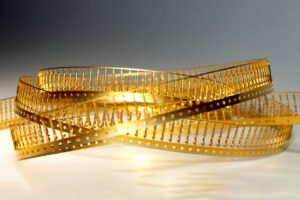
Valve CoresMetal stamping is a manufacturing process used to cut and form flat metal into precise components using specialized tooling and press equipment. At PrecisionX Manufacturing, our metal stamping capabilities support applications where dimensional accuracy, repeatability, and production efficiency are essential. We produce metal stamping components for industries including aerospace, medical, electronics, defense, and industrial equipment, where consistent part performance is critical.

The metal stamping process works by placing sheet or coil metal into a stamping press equipped with engineered dies. As the press cycles, the tooling pierces holes, trims edges, and forms features into the material to create a finished component. Because the process is controlled and repeatable, metal stamping allows thousands of identical parts to be produced quickly while maintaining tight tolerances and consistent geometry.

PrecisionX Manufacturing supports a range of metal stamping operations including blanking, forming, piercing, and progressive die stamping. By combining precise tooling with controlled material handling, we reduce variation and minimize secondary machining operations. This results in faster production, lower per-piece cost, and improved assembly reliability for our customers.

Our metal stamping services also include tooling engineering, process development, and production optimization. We evaluate material type, thickness, and mechanical behavior to ensure each component performs as intended. By designing the stamping process alongside the product design, we help customers improve manufacturability while maintaining performance and quality standards.
Q: What is metal stamping?
A:
Metal stamping is a manufacturing process that uses a stamping press and tooling to cut and shape flat metal into specific parts or components.

Q: How does metal stamping work?
A:
Metal is fed into a press where a custom die performs operations such as cutting, piercing, and forming to produce the finished part during each press cycle.

Q: What types of parts are made using metal stamping?
A:
Metal stamping produces brackets, terminals, connectors, clips, shields, electrical contacts, housings, and other precision metal components.

Q: What materials are used in metal stamping?
A:
Common materials include stainless steel, aluminum, copper alloys, brass, nickel alloys, and other engineered metals depending on the application.

Q: What industries use metal stamping?
A:
Aerospace, electronics, medical devices, automotive, electrical equipment, and industrial manufacturing commonly rely on metal stamping.

Q: Is metal stamping suitable for high-volume production?
A:
Yes. Metal stamping is one of the most efficient manufacturing methods for medium-to-high production volumes because it allows rapid, repeatable production with consistent quality.

Q: Can metal stamping produce complex shapes?
A:
Yes. With properly designed tooling, metal stamping can create detailed features such as small holes, formed tabs, bends, and precise profiles.

Q: Does metal stamping require machining afterward?
A:
Many parts require little or no machining because the stamping die creates the features during the forming process. Some parts may require finishing operations depending on application requirements.

Q: What are the benefits of metal stamping?
A:
Benefits include high production speed, consistent quality, tight tolerances, reduced labor handling, and lower per-part cost compared to machining in many applications.

precision x favicon

Precision Metal Stamping Companies

A manufacturing partner focused on accuracy, repeatability, and long-term production reliability.

Companies searching for precision metal stamping companies are typically looking for more than basic production — they need a supplier capable of consistently manufacturing parts that meet strict dimensional and performance requirements. PrecisionX Manufacturing provides precision metal stamping solutions for customers in aerospace, medical, electronics, defense, and high-reliability industrial markets. Our focus is not only on producing parts, but on ensuring those parts perform correctly throughout the life of the product.

What separates leading precision metal stamping companies is engineering capability. Our team works directly with customer drawings and specifications to develop tooling and manufacturing processes that maintain tight tolerances and repeatability. We evaluate material behavior, forming stresses, and feature geometry to ensure parts assemble properly and function reliably. This engineering-driven approach helps prevent production issues, reduces variation, and improves long-term product stability.

PrecisionX supports a range of capabilities expected from advanced precision metal stamping companies, including progressive die stamping, precision tooling development, and controlled press operations. We manufacture complex components such as electrical contacts, connectors, brackets, clips, and precision-formed parts using stainless steel, copper alloys, aluminum, and specialty metals. Our processes are designed to maintain consistent quality across both medium and high production volumes.

In addition to manufacturing, customers rely on precision metal stamping companies for supply reliability and process control. We maintain stable production methods, monitored processes, and tooling maintenance programs that support predictable lead times and repeatable quality. By combining engineering support with controlled manufacturing, PrecisionX Manufacturing helps customers achieve dependable component supply and long-term production confidence.

Q: What should I look for in precision metal stamping companies?                                                                                                                                                                          A: Key factors include engineering support, tooling capability, tolerance control, quality consistency, and experience with similar materials and applications.

Q: What industries do precision metal stamping companies serve?
A:
Aerospace, medical devices, electronics, defense, automotive, and industrial equipment manufacturers commonly work with precision metal stamping companies.

Q: How are precision metal stamping companies different from general stamping shops?
A:
Precision metal stamping companies focus on tight tolerances, repeatability, and controlled processes rather than simple part production. They support high-reliability applications and complex components.

Q: Can precision metal stamping companies assist with design?
A:
Yes. Many precision metal stamping companies provide design review and manufacturability recommendations to improve part performance and reduce production risk.

Q: What materials can precision metal stamping companies work with?
A:
Common materials include stainless steel, aluminum, copper alloys, brass, and specialty metals depending on application requirements.

Q: Do precision metal stamping companies support prototyping?
A:
Yes. Prototype and pre-production runs allow validation before full-scale manufacturing begins.

Q: How do precision metal stamping companies ensure quality?
A:
Quality is maintained through precision tooling, controlled press operation, inspection procedures, and ongoing tooling maintenance.

Q: Are precision metal stamping companies suitable for high-volume production?
A:
Yes. Precision metal stamping is ideal for medium-to-high volume manufacturing due to its repeatability and efficiency.

Q: Why choose a precision metal stamping company instead of machining?
A:
For many parts, stamping provides faster production, consistent quality, and lower per-piece cost once tooling is developed.

Custom Metal Stamping Services

Engineered metal components manufactured to your specifications, performance requirements, and production volume.

PrecisionX Manufacturing provides custom metal stamping services for companies that require components designed around their exact application. Rather than adapting a standard part, our team works directly from customer drawings, CAD models, or performance requirements to develop a stamping solution that meets both functional and production goals. This approach allows manufacturers to obtain parts optimized for assembly fit, durability, and long-term reliability.

Our custom metal stamping services begin with engineering and tooling development. We evaluate material selection, thickness, tolerances, and feature requirements to determine the most efficient stamping process. By designing the tooling and manufacturing method together, we can often reduce secondary operations, improve repeatability, and lower total production cost. This is especially important for applications where tight tolerances or high reliability are required.

PrecisionX supports a full range of custom metal stamping services including blanking, forming, piercing, and progressive die stamping. We manufacture components with complex geometries, tight hole locations, and formed features using controlled press operations and precision tooling. Our capabilities support both medium and high production volumes while maintaining consistent quality from the first part through long production runs.

In addition to manufacturing, our custom metal stamping services include prototyping, process validation, and production optimization. We collaborate with customers early in the design process to improve manufacturability and reduce potential production risks. The result is a stable supply of components that assemble properly, perform reliably, and maintain consistent specifications over time.

Custom Metal Stamping Services FAQ

Custom metal stamping services involve designing and manufacturing metal components according to a customer’s specific drawings, tolerances, and performance requirements rather than using standard off-the-shelf parts.

Customers typically provide drawings, CAD files, material specifications, quantities, and tolerance requirements. Our engineering team reviews the design and develops the appropriate tooling and manufacturing process.

Yes. Prototype and pre-production runs allow customers to validate fit and function before full production begins.

Stainless steel, aluminum, copper alloys, brass, phosphor bronze, and specialty metals can be used depending on the application.

Yes. Once tooling is developed, custom metal stamping is highly efficient for medium-to-high production quantities with consistent part quality.

Precision tooling and controlled press operations allow tight tolerances and repeatable part geometry across long production runs.

Yes. Progressive dies and engineered tooling can create intricate features, small holes, bends, and formed sections without machining.

In many applications, stamping lowers per-part cost compared to machining because parts can be produced quickly and consistently once tooling is built.

Secondary processes such as plating, heat treating, or finishing can be incorporated depending on the performance and environmental requirements of the component.

Progressive Die FAQ

Progressive die stamping is a manufacturing process where a strip of metal moves through a series of stations inside a single die. Each station performs a different operation, and a finished part is produced with every press cycle.

A coil of metal feeds into a stamping press. As the press cycles, the metal advances through multiple tooling stations that pierce, cut, and form the part step-by-step until the completed component is separated from the strip.

Progressive stamping is best suited for medium-to-high production volumes and parts that require multiple forming or cutting operations.

Electrical contacts, connectors, brackets, clips, terminals, and precision formed components are commonly manufactured using progressive stamping.

Stainless steel, aluminum, copper alloys, brass, and other engineered metals can be used depending on application requirements.

Yes. Although tooling requires upfront development, progressive stamping lowers per-part cost over production runs by reducing handling, labor, and secondary operations.

With properly designed tooling, progressive stamping can maintain tight tolerances and consistent feature placement across long production runs.

Many parts can be fully formed within the die, reducing or eliminating additional machining or processing steps.

The process is ideal for repeat production where thousands to millions of identical parts are required.

Progressive Stamping

Continuous metal forming that produces complex parts efficiently and consistently in a single automated process.

High Speed StampingProgressive stamping is a manufacturing process used to produce metal components through a series of sequential operations performed within one specialized die. During progressive stamping, metal strip material feeds through multiple stations in the tooling, and each press cycle performs a different operation such as piercing, forming, trimming, or bending. By the time the material reaches the final station, a completed component is produced.

The advantage of progressive stamping is efficiency. Instead of moving parts between separate machines or operations, all required features are created during a continuous press operation. This reduces handling, improves repeatability, and allows large quantities of identical parts to be produced quickly. For manufacturers requiring consistent dimensions and reliable assembly fit, progressive stamping provides a stable production method.

At PrecisionX Manufacturing, our progressive stamping capabilities support components with multiple features and tight tolerances. We engineer the tooling layout so each forming stage controls material movement and minimizes distortion. This controlled forming process helps maintain dimensional accuracy, hole location, and consistent part geometry across long production runs.

Progressive stamping is especially beneficial for medium-to-high production volumes. Once tooling is developed, parts can be produced rapidly with minimal variation between pieces. Many components that would otherwise require machining or secondary operations can be manufactured directly in the die, reducing overall production time and per-part cost while maintaining quality.
Metal Stamping Companies

Selecting a manufacturing partner capable of consistent quality, engineered tooling, and reliable production.

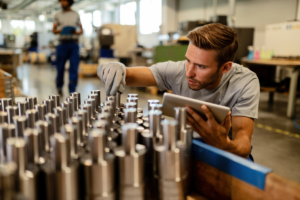
Manufacturers searching for metal stamping companies are typically evaluating suppliers that can produce components accurately and consistently over long production runs. Metal stamping companies vary widely in capability, from general fabrication shops to specialized manufacturers focused on tight tolerances and high-reliability parts. PrecisionX Manufacturing supports customers who require controlled processes, engineered tooling, and repeatable production for critical applications.

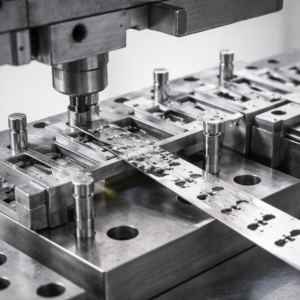
Leading metal stamping companies provide more than basic part production. They support customers with design review, tooling development, and process planning to ensure parts can be manufactured efficiently while maintaining performance requirements. Our engineering team evaluates material properties, part geometry, and tolerance expectations to determine the most appropriate stamping method and tooling configuration before production begins.

PrecisionX operates as a full-service partner among modern metal stamping companies, offering progressive stamping, forming, blanking, and piercing operations. We manufacture brackets, terminals, connectors, clips, and formed components using stainless steel, copper alloys, aluminum, and specialty metals. By controlling the stamping process and tooling maintenance, we help customers maintain consistent assembly performance and reliable supply.

When comparing metal stamping companies, production stability and quality consistency are critical considerations. We maintain controlled manufacturing processes and validated tooling to support predictable lead times and repeatable results. Our approach allows customers to rely on a stable supply of components while reducing variability and production risk.
Metal Stamping Companies FAQ

Q: What do metal stamping companies do?
A:
Metal stamping companies manufacture metal components by cutting and forming sheet or coil metal using stamping presses and custom tooling.

Q: What types of parts do metal stamping companies produce?
A:
Common parts include brackets, clips, connectors, electrical contacts, terminals, housings, and other formed metal components.

Q: How do I choose between metal stamping companies?
A:
Evaluate engineering support, tooling capability, tolerance control, quality systems, and experience with your material and application requirements.

Q: Do metal stamping companies help with design?
A:
Many metal stamping companies provide manufacturability review and recommend design adjustments to improve production efficiency and part performance.

Q: What materials do metal stamping companies work with?
A:
Stainless steel, aluminum, brass, copper alloys, and other engineered metals are commonly used.

Q: Are metal stamping companies suitable for high-volume production?
A:
Yes. Metal stamping is highly efficient for medium-to-high production quantities because parts can be produced quickly and consistently once tooling is developed.

Q: Do metal stamping companies provide prototypes?
A:
Many companies support prototype or pre-production runs to validate fit and function before full production.

Q: What is the advantage of working with specialized metal stamping companies?
A:
Specialized manufacturers maintain tighter tolerances, better repeatability, and improved quality control for complex or high-reliability components.

Q: Can metal stamping companies reduce manufacturing cost?
A:
Yes. Compared to machining in certain applications, stamping often lowers per-part cost and improves production speed once tooling is established.

Progressive Die FAQ

Q: What is a progressive die?
A:
A progressive die is a multi-station stamping tool that performs several cutting and forming operations sequentially as metal strip moves through a stamping press.

Q: How does a progressive die work?
A:
With each press stroke, the material advances to the next station where another operation occurs. The finished component is separated from the strip at the final station.

Q: What operations can a progressive die perform?
A:
Common operations include piercing, blanking, trimming, bending, forming, and coining.

Q: Why is a progressive die important?
A:
The die determines part accuracy, repeatability, and production speed. Proper die design directly affects quality and manufacturing efficiency.

Q: When should a progressive die be used?
A:
Progressive dies are best used for parts produced in medium-to-high quantities that require multiple features or forming steps.

Q: What materials can be used with a progressive die?
A:
Stainless steel, aluminum, copper alloys, brass, and other sheet metals can be processed using progressive die tooling.

Q: Does a progressive die reduce production cost?
A:
Yes. Although tooling requires upfront investment, it lowers per-part cost by reducing labor, handling, and secondary operations over long production runs.

Q: How long does a progressive die last?
A:
With proper maintenance and tooling care, progressive dies can support very long production runs while maintaining consistent part quality.

Q: Is a progressive die the same as a single-operation die?
A:
No. A single-operation die performs one process per press stroke, while a progressive die performs multiple operations in sequence within the same tool.

Progressive Die

Engineered tooling designed to perform multiple forming operations within a single stamping process.

A progressive die is a specialized metal stamping tool used to produce complex components through a series of sequential forming and cutting operations. The die contains multiple stations, each performing a specific step such as piercing, trimming, bending, or forming. As strip metal advances through the progressive die with each press stroke, the part gradually takes shape until a finished component is produced at the final station.

The purpose of a progressive die is to combine multiple manufacturing operations into one continuous process. Instead of moving parts between separate machines, the tooling performs all required features within the stamping press. This reduces handling, improves repeatability, and allows large quantities of identical components to be manufactured efficiently.

At PrecisionX Manufacturing, every progressive die is engineered around the part’s geometry, material behavior, and tolerance requirements. We design the station layout to control material flow and minimize distortion while maintaining feature accuracy. Proper die design is critical to maintaining hole location, edge quality, and consistent formed angles across long production runs.

A well-designed progressive die supports stable production and predictable part quality. Once developed and validated, the die allows high-speed production with minimal variation between parts. This makes progressive die tooling especially valuable for medium-to-high volume manufacturing where consistent assembly performance and reliable supply are required.

Custom Metal Stamping Dies

Engineered tooling designed to perform multiple forming operations within a single stamping process.

Custom metal stamping dies are precision tools designed specifically for a customer’s component rather than using standardized tooling. At PrecisionX Manufacturing, we develop custom metal stamping dies based on part drawings, CAD models, and performance requirements. Because the die determines the geometry and repeatability of every stamped part, properly engineered tooling is critical to achieving consistent quality and reliable production.

Our engineering team evaluates material thickness, tolerances, feature geometry, and production volume when designing custom metal stamping dies. We determine clearances, forming radii, and station layout to control material flow and reduce distortion during stamping. This allows parts to maintain accurate hole locations, clean edges, and consistent formed features throughout long production runs.

PrecisionX designs custom metal stamping dies for progressive stamping, forming, blanking, and complex multi-stage operations. By building tooling around the part rather than modifying the part to fit existing tooling, customers gain improved assembly fit and reduced need for secondary machining. Well-designed dies also reduce scrap, stabilize production, and improve long-term manufacturing efficiency.

In addition to tooling design and build, our custom metal stamping dies are developed with maintainability and longevity in mind. We incorporate hardened tool steels, wear-resistant surfaces, and serviceable components so dies can support extended production cycles. This helps customers maintain predictable lead times, consistent part quality, and reliable supply over the life of the product.

Custom Metal Stamping Dies FAQ

Q: What are custom metal stamping dies?
A:
Custom metal stamping dies are specialized tools engineered specifically for a customer’s part design, allowing precise shaping and forming of metal components during stamping.

Q: Why use custom metal stamping dies instead of standard tooling?
A:
Custom dies ensure the part meets exact dimensional and functional requirements, improves assembly fit, and supports consistent repeatable production.

Q: What information is required to design custom metal stamping dies?
A:
Typically drawings or CAD files, material specifications, tolerances, and production quantity expectations are used to design the tooling.

Q: Can custom metal stamping dies handle complex parts?
A:
Yes. Custom dies are often required for parts with tight tolerances, intricate features, formed tabs, or multiple operations.

Q: How long do custom metal stamping dies last?
A:
With proper design and maintenance, custom metal stamping dies can operate for hundreds of thousands to millions of press cycles.

Q: Are custom metal stamping dies expensive?
A:
There is an upfront tooling investment, but over production runs they significantly reduce per-part manufacturing cost and improve consistency.

Q: Do custom metal stamping dies reduce secondary operations?
A:
Yes. Properly engineered tooling can incorporate multiple forming steps within the die, reducing machining or rework.

Q: What materials can be used with custom metal stamping dies?
A:
Stainless steel, aluminum, copper alloys, brass, and specialty metals can all be processed depending on application requirements.

Q: Do custom metal stamping dies require maintenance?
A:
Routine inspection, sharpening, and adjustments help maintain accuracy and extend tool life.

High Precision Stamping FAQ

Q: What is high precision stamping?
A:
High precision stamping is a manufacturing process that produces metal components with very tight tolerances and consistent repeatability using engineered tooling and controlled press operations.

Q: How is high precision stamping different from standard stamping?
A:
High precision stamping focuses on strict dimensional accuracy, controlled material behavior, and consistent results across production runs, while general stamping may allow greater variation.

Q: What tolerances can high precision stamping achieve?
A:
Depending on material and geometry, high precision stamping can maintain tolerances within a few thousandths of an inch or better.

Q: What industries require high precision stamping?
A:
Aerospace, medical devices, electronics, electrical connectors, defense, and high-performance industrial equipment commonly require high precision stamping.

Q: What materials are used in high precision stamping?
A:
Stainless steel, aluminum, brass, copper alloys, nickel alloys, and other engineered metals are commonly used.

Q: Can high precision stamping produce complex parts?
A:
Yes. Proper tooling design allows intricate features, tight hole locations, and formed components to be produced without machining.

Q: Is high precision stamping suitable for high-volume production?
A:
Yes. Once tooling is developed, the process supports efficient medium-to-high volume production with consistent quality.

Q: Does high precision stamping reduce manufacturing cost?
A:
In many applications, stamping reduces per-part cost compared to machining while maintaining required accuracy.

Q: How is quality maintained in high precision stamping?
A:
Quality is maintained through engineered tooling, controlled press setup, inspection procedures, and ongoing tooling maintenance.

High Precision Stamping

Manufacturing metal components with tight tolerances, controlled processes, and repeatable quality.

High precision stamping is a metal forming process used when components must meet strict dimensional tolerances and consistent performance requirements. At PrecisionX Manufacturing, our high precision stamping capabilities are designed for applications where even small variations can affect assembly fit or function. Using engineered tooling and controlled press operations, we produce components that maintain accurate geometry across long production runs.

Unlike general stamping, high precision stamping focuses on repeatability and process stability. We carefully control material thickness, forming pressure, and tooling alignment to ensure every part matches the required specifications. By managing burr height, edge quality, and feature location, we help customers avoid assembly issues and maintain product reliability.

Our high precision stamping services support complex parts with fine features, tight hole locations, and formed sections. We work with materials such as stainless steel, copper alloys, aluminum, and specialty metals commonly used in aerospace, medical devices, electronics, and high-performance industrial products. Proper tooling design and material handling allow us to maintain dimensional accuracy while producing parts efficiently.

In addition to manufacturing, our high precision stamping process includes tooling development, inspection, and ongoing process monitoring. By validating the process and maintaining tooling condition, we ensure consistent results from the first production run through long-term manufacturing programs. This provides customers with dependable component performance and predictable supply.
Progressive Die Manufacturers

Tooling design and build for reliable stamping production and repeatable part quality.

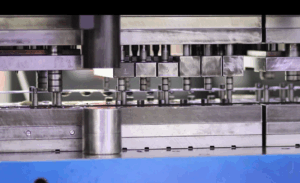
Companies searching for progressive die manufacturers are often developing a new product or transitioning production to a more efficient process. A progressive die is the core tooling that enables continuous stamping production, and its design directly affects part accuracy, production speed, and long-term reliability. PrecisionX Manufacturing engineers and builds progressive dies designed to support stable manufacturing and consistent component performance.

Unlike general fabricators, experienced progressive die manufacturers focus heavily on tooling engineering. Our team analyzes part geometry, material behavior, and tolerance requirements to determine proper station layout, strip progression, and forming sequences. Careful die design controls material movement, maintains hole location accuracy, and reduces distortion during stamping.

As a full-service partner among progressive die manufacturers, PrecisionX supports the entire tooling lifecycle. We design and build progressive dies for complex components including electrical contacts, connectors, brackets, and formed metal parts. Our tooling incorporates hardened tool steels and wear-resistant features to support extended production runs while maintaining dimensional consistency.

Reliable progressive die manufacturers also provide ongoing tooling maintenance and production support. We monitor die performance, perform preventative maintenance, and make adjustments when necessary to maintain quality. This ensures predictable lead times, repeatable results, and dependable supply for customers operating long-term manufacturing programs.

Progressive Die Manufacturers FAQ

Q: What do progressive die manufacturers do?
A:
Progressive die manufacturers design and build multi-station stamping tools that allow metal components to be formed through a continuous stamping process.

Q: Why is the progressive die manufacturer important?
A:
The quality of the die determines part accuracy, repeatability, and production stability. Proper tooling design reduces scrap and maintains consistent part geometry.

Q: What industries work with progressive die manufacturers?
A:
Aerospace, medical, electronics, electrical connector, automotive, and industrial equipment manufacturers commonly require progressive die tooling.

Q: What information is needed to work with progressive die manufacturers?
A:
Customers typically provide part drawings, CAD files, material specifications, tolerances, and estimated production quantities.

Q: How long does it take progressive die manufacturers to build tooling?
A:
Lead times vary depending on complexity, but tooling development typically includes design, machining, assembly, and validation before production.

Q: Do progressive die manufacturers also produce parts?
A:
Many progressive die manufacturers, including PrecisionX Manufacturing, both build the die and run production stamping using the tooling.

Q: What materials can progressive dies process?
A:
Stainless steel, aluminum, copper alloys, brass, and other sheet metals can be used depending on application requirements.

Q: How long do progressive dies last?
A:
With proper maintenance, progressive dies can operate for very long production runs while maintaining consistent quality.

Q: What are the benefits of working with experienced progressive die manufacturers?
A:
Experienced manufacturers provide better tooling design, reduced scrap, consistent tolerances, improved production efficiency, and long-term supply reliability.

Precision Die & Stamping FAQ

Q: What does precision die & stamping mean?
A:
Precision die & stamping refers to a manufacturing capability where a supplier both designs and builds the stamping die and produces the stamped metal components using that tooling.

Q: Why combine die design and stamping production?
A:
When the same manufacturer handles tooling and production, they can better control tolerances, improve repeatability, and resolve issues quickly.

Q: What types of parts are made using precision die & stamping?
A:
Common parts include connectors, electrical contacts, clips, brackets, terminals, and precision formed components.

Q: What materials are used in precision die & stamping?
A:
Stainless steel, aluminum, brass, copper alloys, and specialty metals are commonly processed depending on application requirements.

Q: Is precision die & stamping suitable for high-volume manufacturing?
A:
Yes. Once tooling is validated, stamping production can produce large quantities of consistent parts efficiently.

Q: Does precision die & stamping reduce secondary operations?
A:
Properly designed tooling can incorporate multiple features, reducing machining and additional processing steps.

Q: How does precision die & stamping improve part quality?
A:
Tight tooling tolerances and controlled press setup help maintain consistent geometry and assembly fit.

Q: Do suppliers offering precision die & stamping support prototyping?
A:
Yes. Prototype and pre-production runs allow validation before full-scale production begins.

Q: What industries use precision die & stamping?
A:
Aerospace, medical devices, electronics, defense, and industrial equipment manufacturers commonly require these capabilities.

Precision Die & Stamping

Integrated tooling engineering and precision stamping manufacturing from a single qualified supplier.

Precision die & stamping refers to the combined capability of designing precision tooling and producing stamped metal components using that tooling. At PrecisionX Manufacturing, we support both aspects of the process — engineering and building the die while also manufacturing the finished parts. By managing tooling and production together, we maintain tighter control over dimensional accuracy, repeatability, and long-term production stability.

In precision die & stamping applications, the die determines the quality of the part. Our engineering team develops tooling layouts that control material flow, maintain hole location accuracy, and ensure consistent formed features. Proper die design allows stamped components to be produced with minimal variation, which is critical for assemblies requiring reliable fit and performance.

Our precision die & stamping capabilities include progressive die stamping, forming, blanking, and multi-stage operations. We manufacture components such as electrical contacts, connectors, brackets, clips, and formed metal parts using stainless steel, copper alloys, aluminum, and specialty metals. Combining tooling engineering with controlled press operations allows us to produce high-accuracy components across medium and high production volumes.

PrecisionX provides complete precision die & stamping support throughout the product lifecycle. From initial design review and prototyping to validated production and tooling maintenance, we help customers achieve stable manufacturing and consistent component supply. Managing both tooling and stamping within one facility reduces production risk, shortens development time, and improves communication throughout the project.

Progressive Die Metal Stamping

Continuous multi-stage stamping that produces complex metal components efficiently and consistently.

Progressive die metal stamping is a manufacturing process that forms metal components through multiple sequential operations within a single stamping tool. As strip metal feeds into the press, each station of the progressive die performs a specific function such as piercing, cutting, bending, or forming. With each press cycle, the material advances to the next station until the completed part is separated from the strip at the final stage.

The primary benefit of progressive die metal stamping is production efficiency. Instead of performing separate operations on different machines, all required features are created during one continuous process. This reduces part handling, minimizes variation, and allows high quantities of identical components to be produced quickly while maintaining consistent dimensions and quality.

At PrecisionX Manufacturing, our progressive die metal stamping capabilities support components requiring tight tolerances and repeatable geometry. We design tooling layouts that control material flow, maintain accurate feature placement, and prevent distortion during forming. Properly engineered progressive dies allow complex parts with multiple features to be produced reliably across long production runs.

Progressive die metal stamping is particularly effective for medium-to-high volume production where repeatability and per-part cost are important. Many components that would otherwise require machining or secondary operations can be produced directly within the die. This helps reduce overall manufacturing time, stabilize production, and maintain consistent assembly performance.

Progressive Die Metal Stamping FAQ

Q: What is progressive die metal stamping?
A:
Progressive die metal stamping is a manufacturing process where metal strip moves through multiple stations inside a stamping die, with each station performing part of the forming process until the finished component is produced.

Q: How does progressive die metal stamping work?
A:
A coil of metal feeds into a stamping press. Each press stroke advances the material to a new station where operations such as piercing, forming, and trimming occur sequentially.

Q: What are the advantages of progressive die metal stamping?
A:
Benefits include high production speed, consistent part quality, reduced handling, and lower per-part cost over production runs.

Q: What types of parts are made using progressive die metal stamping?
A:
Electrical connectors, terminals, clips, brackets, contacts, and precision formed components are commonly produced

Q: What materials can be used in progressive die metal stamping?
A:
Stainless steel, aluminum, brass, copper alloys, and other sheet metals are commonly used depending on application requirements.

Q: When should progressive die metal stamping be used?
A:
It is best suited for medium-to-high production volumes and parts requiring multiple forming or cutting operations.

Q: Does progressive die metal stamping eliminate secondary operations?
A:
Many parts can be fully formed within the die, reducing the need for machining or additional processing.

Q: How accurate is progressive die metal stamping?
A:
With properly engineered tooling and controlled press setup, the process maintains tight tolerances and consistent feature placement.

Q: Is progressive die metal stamping cost-effective?
A:
Yes. Although tooling requires initial investment, it lowers manufacturing cost per part across long production runs due to efficiency and repeatability.

Progressive Die Tooling FAQ

Q: What is progressive die tooling?
A:
Progressive die tooling is a multi-station stamping tool used inside a press to form metal components step-by-step as the material advances through the die.

Q: How is progressive die tooling different from a single-operation die?
A:
A single-operation die performs one action per press stroke, while progressive die tooling performs multiple operations sequentially within one continuous tool.

Q: Why is progressive die tooling important?
A:
The tooling controls accuracy, repeatability, and production speed. High-quality tooling ensures consistent parts and stable manufacturing.

Q: What operations occur inside progressive die tooling?
A:
Operations may include piercing, blanking, bending, forming, coining, and trimming.

Q: What materials are used to build progressive die tooling?
A:
Tool steels and wear-resistant materials are commonly used to withstand repeated press cycles and maintain dimensional stability.

Q: How long does progressive die tooling last?
A:
Tool life depends on material type, production volume, and maintenance, but properly designed tooling can run for long production programs.

Q: Can progressive die tooling produce tight tolerance parts?
A:
Yes. Precision alignment and controlled forming allow tight tolerances and repeatable feature placement.

Q: Does progressive die tooling reduce manufacturing cost?
A:
Yes. By combining multiple operations into one tool, it improves efficiency and lowers per-part production cost over time.

Q: Is progressive die tooling used for high-volume production?
A:
It is most commonly used for medium-to-high volume manufacturing where consistent output is required.

Progressive Die Tooling

Engineered tooling systems that enable consistent, high-volume metal stamping production.

Progressive die tooling is the specialized tooling used in a stamping press to produce metal components through multiple forming stages in a single continuous operation. The die contains a series of precisely aligned stations, each performing a specific task such as piercing, forming, coining, or trimming. As metal strip feeds through the press, the progressive die tooling advances the material from station to station until the finished part is separated at the final stage.

The performance of any stamping process depends heavily on the quality of the progressive die tooling. Proper die design controls material flow, maintains feature alignment, and prevents distortion or tearing during forming. Accurate tool construction also ensures repeatable dimensions across production runs, which is critical for parts that must meet tight tolerances or fit precisely into assemblies.

At PrecisionX Manufacturing, our progressive die tooling is engineered to support both part complexity and long production life. Tooling is designed to withstand repeated press cycles while maintaining dimensional stability and consistent feature placement. By carefully selecting tool steels, clearances, and forming strategies, we help minimize wear and maintain reliable output over extended production schedules.

Well-designed progressive die tooling reduces downtime, improves process stability, and lowers overall manufacturing cost. Because multiple operations occur within one die, the tooling eliminates unnecessary handling and helps streamline production. Proper maintenance and build quality allow the die to produce high quantities of uniform parts while preserving part accuracy and surface condition.

Progressive Die and Stamping

Integrated tooling and stamping processes for consistent, high-volume metal component production.

Progressive die and stamping refers to a manufacturing approach where a precision-built progressive die is used inside a stamping press to produce metal components through multiple forming stages. As coil material feeds into the press, the progressive die performs a sequence of operations including piercing, bending, forming, and trimming. Each press stroke advances the material to the next station until the finished component is separated from the strip.

The effectiveness of progressive die and stamping depends on the coordination between tooling design and press operation. The die controls material movement, feature location, and forming geometry, while the stamping press provides consistent force and repeatable motion. When both are engineered together, manufacturers can produce complex parts with stable dimensions and minimal variation.

At PrecisionX Manufacturing, our progressive die and stamping capabilities are developed as a single integrated system. Tooling layouts are designed around the specific material, thickness, and part geometry to support reliable forming and accurate feature placement. This allows multi-feature components to be produced in one continuous process instead of requiring several separate manufacturing steps.

Using progressive die and stamping improves production efficiency and repeatability. Because multiple operations occur within a single die, part handling is minimized and production speeds increase. The process is well suited for medium-to-high volume components that require consistent quality, controlled tolerances, and dependable performance during assembly.

Progressive Die & Stamping FAQ

Q: What is progressive die and stamping?
A:
It is a manufacturing process where a progressive die tool and stamping press work together to form metal parts through multiple sequential operations in one continuous production cycle.

Q: How does progressive die and stamping work?
A:
Metal strip feeds into a press and moves through several stations inside the progressive die. Each station performs a specific operation until the finished part is produced.

Q: What is the difference between progressive die and stamping?
A:
The progressive die is the tooling that shapes the material, while stamping is the pressing process that applies force to create the part.

Q: What are the advantages of progressive die and stamping?
A:
Benefits include faster production, consistent part quality, reduced handling, and lower cost per part over long production runs.

Q: What types of parts are made using progressive die and stamping?
A:
Electrical components, terminals, brackets, clips, contacts, and formed precision metal parts are commonly produced.

Q: Is progressive die and stamping suitable for tight tolerance parts?
A:
Yes. Properly engineered tooling and controlled press operation allow repeatable dimensions and accurate feature placement.

Q: When should progressive die and stamping be used?
A:
It is best used for medium-to-high production volumes and parts requiring multiple forming or cutting operations.

Q: Does progressive die and stamping eliminate secondary operations?
A:
Many parts can be completed entirely within the die, reducing or eliminating additional machining or forming steps.

Q: What materials can be used in progressive die and stamping?
A:
Common materials include stainless steel, copper alloys, brass, and aluminum depending on application requirements.

Stamping Die Manufacturers FAQ

Q: What do stamping die manufacturers do?
A:
Stamping die manufacturers design and build the tooling used in stamping presses to cut and form metal parts.

Q: Why are stamping die manufacturers important?
A:
The die determines part accuracy, repeatability, and production stability. High-quality tooling ensures consistent components.

Q: What types of dies do stamping die manufacturers produce?
A:
Common types include progressive dies, forming dies, blanking dies, and precision stamping dies.

Q: What materials are stamping dies made from?
A:
Dies are typically built from hardened tool steels and wear-resistant materials designed for long production life.

Q: Do stamping die manufacturers also run production parts?
A:
Some manufacturers design and build tooling while also producing stamped components using those dies.

Q: How long does a stamping die last?
A:
Tool life varies by material and production volume, but properly built dies can run for extended production programs with maintenance.

Q: Can stamping die manufacturers produce tight tolerance tooling?
A:
Yes. Precision alignment and accurate machining allow dies to produce repeatable, tight-tolerance parts.

Q: What information is needed to build a stamping die?
A:
Part drawings, material specifications, tolerances, and expected production volume are typically required.

Q: How do stamping die manufacturers help reduce production problems?
A:
Proper die design controls material movement, reduces defects, and stabilizes the manufacturing process.

Stamping Die Manufacturers

Precision tooling manufacturers designing and building reliable metal stamping dies.

Stamping die manufacturers design and build the tooling required to produce metal components in stamping presses. A stamping die shapes flat metal material into a finished or near-finished part by controlling cutting, forming, and feature placement during the press cycle. The quality of the die directly affects part accuracy, repeatability, and overall manufacturing efficiency.

Experienced stamping die manufacturers focus on both tool construction and part performance. Proper die design accounts for material thickness, forming behavior, springback, and feature tolerances. Well-engineered dies guide material flow, maintain alignment, and reduce the risk of distortion or inconsistent dimensions during production.

At PrecisionX Manufacturing, our capabilities as stamping die manufacturers include tooling design, build, and integration with production stamping operations. By designing the die with the final manufacturing process in mind, we support stable part production and long tool life. Tool steels, clearances, and forming strategies are selected to maintain performance across repeated press cycles.

Working with knowledgeable stamping die manufacturers helps improve production reliability and reduces downstream issues. A properly designed and constructed die minimizes downtime, limits variation, and allows consistent part quality across production runs. Reliable tooling also helps maintain predictable lead times and supports efficient manufacturing schedules.

Ready to elevate your manufacturing precision?

Partner with PrecisionX Manufacturing for your next critical component project. Our engineers are ready to discuss your specifications and develop a scalable manufacturing solution.