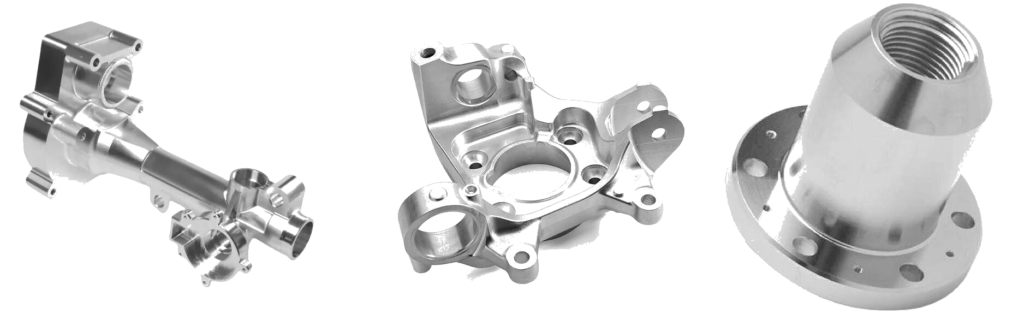
At PrecisionX Group, we specialize in delivering high-precision metal components for a wide range of industries, combining advanced manufacturing techniques with high-speed production capabilities. Our team is equipped to produce complex, reliable parts with exceptionally tight tolerances, ensuring consistency and performance in even the most demanding applications.
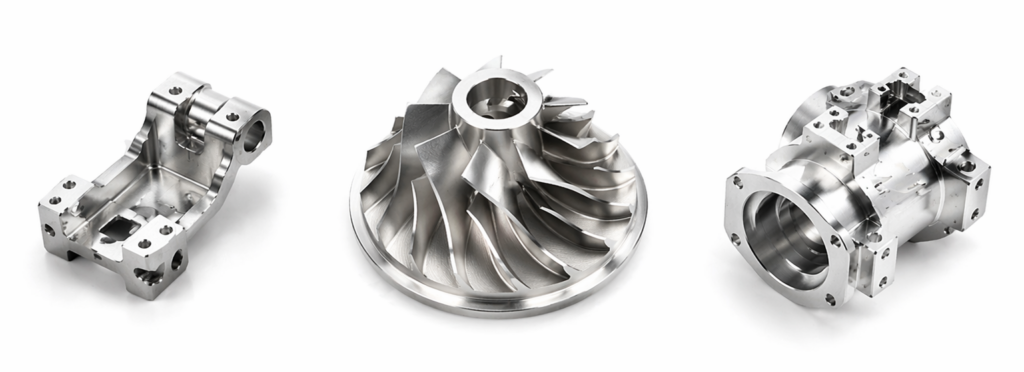
5 Axis CNC
5 Axis CNC Machining for Complex Precision Manufacturing
5 axis CNC machining enables the efficient production of complex, high-precision components for industries where accuracy and repeatability are critical. By moving cutting tools across five axes simultaneously, manufacturers can achieve intricate geometries, tight tolerances, and superior surface finishes in a single setup.
Modern 5 axis CNC systems reduce the need for multiple operations, improving cycle times and production consistency. This streamlined approach supports high-speed manufacturing of complex parts while maintaining the precision required for high-performance applications.
With the ability to process a wide range of materials and optimize tool paths, 5 axis CNC machining enhances flexibility, reduces waste, and improves overall manufacturability. By leveraging 5 axis CNC capabilities, manufacturers can scale production while consistently meeting strict performance and quality standards.
A: 5 axis CNC machining is a manufacturing process that allows cutting tools to move along five different axes simultaneously, enabling the production of complex parts with high precision and reduced setup time.
A: Traditional machining typically operates on three axes, requiring multiple setups for complex components. 5 axis CNC machining reduces repositioning, improving efficiency and dimensional accuracy.
A: Industries such as aerospace, defense, medical device manufacturing, and advanced industrial production commonly rely on 5 axis CNC machining for precision components.
A: 5 axis CNC machining can be used with materials including aluminum, titanium, stainless steel, hardened alloys, and other high-performance metals.
A: By enabling multi-surface machining in a single setup, 5 axis CNC systems reduce cycle times, minimize manual handling, and improve overall throughput.
A: Precision ensures components meet strict dimensional tolerances, which is critical for performance, safety, and assembly reliability in high-demand applications.
A: Yes. 5 axis CNC machining is highly effective for producing complex prototypes as well as scaling to full production runs.
A: Optimized tooling and tool path strategies help maximize cutting efficiency, improve surface finishes, and extend tool life in 5 axis CNC operations.
A: Challenges include complex programming requirements, higher equipment investment, and the need for skilled operators to maintain precision across production cycles.
A: Investing in 5 axis CNC machining enables manufacturers to produce complex components more efficiently, improve quality consistency, and remain competitive in precision manufacturing markets.
3 Axis CNC Milling
Reliable 3 Axis CNC Milling Solutions
3 axis CNC milling remains one of the most widely used manufacturing solutions for producing precise, repeatable components across many industries. Operating along the X, Y, and Z axes, 3 axis CNC milling is ideal for machining flat surfaces, slots, holes, and moderately complex part geometries. For components that do not require multi-angle machining, this process delivers an efficient balance of precision, speed, andcost-effectiveness.
Modern 3 axis CNC milling supports a wide range of materials, including aluminum, stainless steel, titanium, brass, copper, and engineered plastics. The process is commonly used in aerospace, medical, defense, and industrial manufacturing because it provides consistent accuracy and repeatability. 3 axis CNC milling is especially effective for prototypes, low-volume production, and precision components with simpler geometries.
Manufacturers benefit from 3 axis CNC milling through reduced setup times, dependable machining consistency, and scalable production capabilities. Because the process involves fewer moving axes than 5 axis machining, programming and production are often more streamlined while still maintaining tight tolerances and high-
quality surface finishes. As a result, 3 axis CNC milling continues to be a reliable solution for precision manufacturing applications.
FAQ | 3 axis CNC milling
3 axis CNC milling is a machining process where cutting tools move along three linear axes — X, Y, and Z — to manufacture precision parts and components.
3 axis CNC milling operates on three linear axes, while 5 axis machining includes additional rotational movement for more complex geometries and multi-surface
machining.
Industries such as aerospace, medical device manufacturing, defense, automotive, and industrial manufacturing commonly rely on 3 axis CNC milling.
3 axis CNC milling can machine aluminum, stainless steel, titanium, brass, plastics, copper, and other engineered materials.
Benefits include precision, repeatability, lower production costs, faster setup times, and efficient machining for less complex components.
Yes. 3 axis CNC milling is commonly used for prototype development, custom parts, and low-volume production runs requiring tight tolerances.
Because it uses a simpler machining setup than multi-axis systems, 3 axis CNC milling is often a more cost-effective option for parts with less complex geometries.
With proper tooling and machining strategies, 3 axis CNC milling can produce smooth surface finishes and highly consistent part quality.
Yes. 3 axis CNC milling is commonly used for both low-volume and high-volume production depending on the part design and manufacturing requirements.
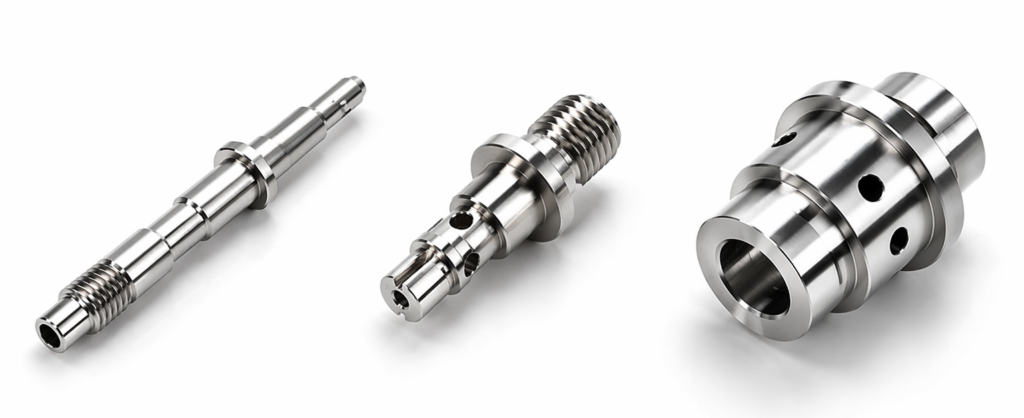
Swiss Machining Services
Swiss Machining Services for High-Precision Component Manufacturing
Swiss machining services are ideal for producing small, complex components with exceptional accuracy and repeatability. Using sliding headstock technology, this process provides continuous support to the workpiece, allowing for tight tolerances, fine surface finishes, and consistent results across high-volume production.
Well-suited for intricate parts with detailed geometries and high length-to-diameter ratios, Swiss machining services minimize vibration and maintain precise tool control. This improves efficiency, reduces secondary operations, and ensures greater consistency throughout production runs.
By enabling multiple operations in a single setup, Swiss machining services streamline workflow efficiency and reduce cycle times. Leveraging advanced Swiss machining services allows manufacturers to scale production while maintaining the precision and reliability required for high-performance applications.
FAQ | Swiss Machining Services:
A: Swiss machining services involve precision turning processes that use sliding headstock lathes to produce small, complex components with tight tolerances and excellent surface finishes.
A: Unlike traditional lathes, Swiss machining services provide continuous support to the workpiece near the cutting tool, reducing deflection and improving dimensional accuracy.
A: Aerospace, medical device manufacturing, electronics, and advanced industrial sectors often rely on Swiss machining services for precision component production.
A: 5 axis CNC machining can be used with materials including aluminum, titanium, stainless steel, hardened alloys, and other high-performance metals.
A: Components with small diameters, intricate features, and long length-to-diameter ratios are ideal for Swiss machining services.
A: Swiss machining services can be used with materials such as stainless steel, aluminum, titanium, brass, and specialty alloys.
A: By enabling multiple machining operations in a single setup, Swiss machining services help reduce cycle times, minimize handling, and improve throughput.
A: Yes. Swiss machining services are highly scalable and can efficiently support both early-stage prototypes and long-term production programs.
A: Challenges include complex programming requirements, higher equipment investment, and the need for skilled operators to maintain precision across production cycles.
A: Repeatability ensures that each component meets the same dimensional and performance standards, which is essential for reliability in critical applications.
A: Manufacturers should evaluate technical expertise, equipment capabilities, quality certifications, and the provider’s ability to deliver consistent results across production lifecycles.
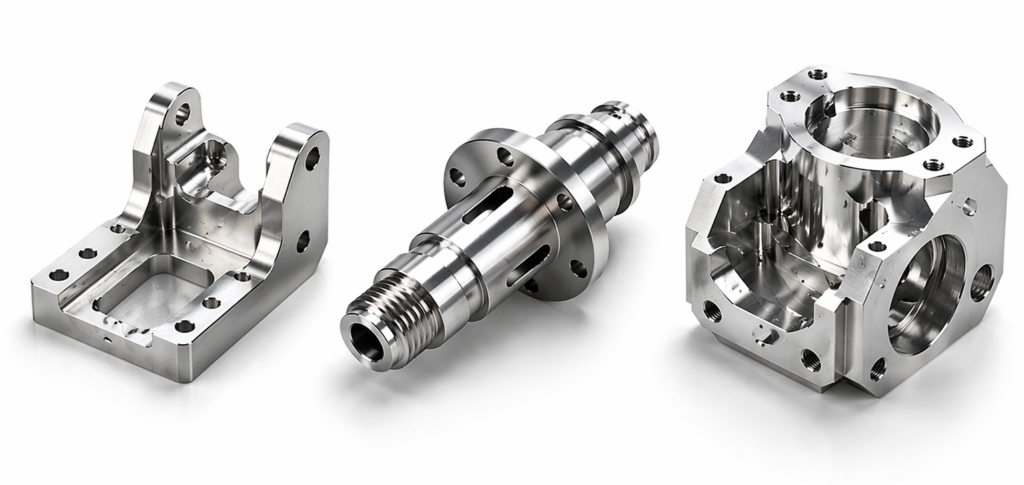
CNC Machining
CNC Machining for Precision Manufacturing and Complex Component Production
CNC machining plays a critical role in producing high-precision components across aerospace, medical, defense, and industrial applications. Using computer-controlled equipment, manufacturers can achieve tight tolerances, consistent dimensional accuracy, and reliable repeatability throughout the production process.
Multi-axis CNC machining technologies support the efficient production of complex geometries by enabling multiple operations within a single setup. This reduces handling time, improves workflow efficiency, and ensures consistent quality across both low- and high-volume production runs.
Capable of machining a wide range of materials and optimizing tool paths, CNC machining enhances flexibility and overall manufacturability. By leveraging CNC machining capabilities, manufacturers can scale production while maintaining the precision and performance required for high-performance applications.
A: CNC machining is a manufacturing process that uses computer-controlled machine tools to remove material and produce precision components with consistent tolerances and repeatable accuracy.
A: CNC machining uses programmed tool paths and automated control systems to minimize human error and maintain tight dimensional accuracy during production.
A: Industries such as aerospace, defense, medical device manufacturing, automotive, and industrial equipment production commonly depend on CNC machining for precision parts.
A: CNC machining supports materials including aluminum, titanium, stainless steel, hardened alloys, plastics, and other engineered materials.
A: Automated processes and repeatable machining cycles allow CNC machining to maintain consistent quality while increasing production efficiency and throughput.
A: Yes. CNC machining is widely used for rapid prototyping and design validation before transitioning to full production.
A: Precision housings, brackets, fasteners, structural parts, and complex assemblies are often manufactured using CNC machining.
A: Proper tooling selection and optimization help improve surface finishes, extend tool life, and enhance overall efficiency in CNC machining operations.
A: Challenges include managing complex programming, maintaining tight tolerances, and ensuring process stability during long production runs.
A: Investing in CNC machining enables manufacturers to improve precision, increase production flexibility, and maintain competitiveness in advanced manufacturing markets.
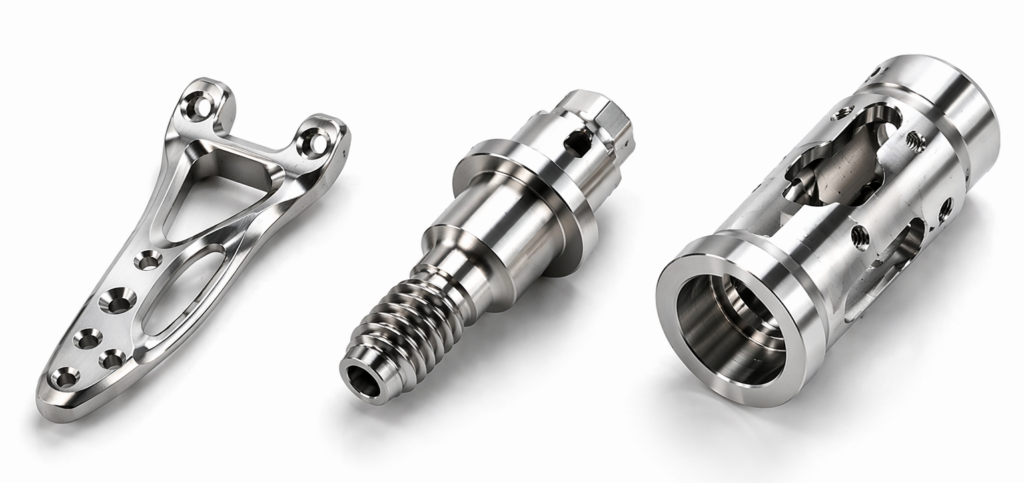
Medical CNC Machining
Medical CNC Machining for Precision Healthcare Component Manufacturing
Medical CNC machining is essential for producing high-precision components used in surgical instruments, implants, and diagnostic equipment. Strict tolerances, material requirements, and regulatory standards make accuracy, surface finish, and repeatability critical throughout the production process.
Multi-axis medical CNC machining technologies enable the efficient production of complex geometries by completing multiple operations in a single setup. This reduces handling, improves efficiency, and ensures consistent quality across both prototype and production runs while maintaining the precision required for medical applications.
Supporting specialized materials and optimized manufacturing processes, medical CNC machining enhances flexibility and overall manufacturability. By leveraging medical CNC machining capabilities, manufacturers can scale production while maintaining compliance, reliability, and performance in highly regulated environments.
A: Medical CNC machining is a precision manufacturing process used to produce components for medical devices and healthcare equipment using computer-controlled machining technology.
A: Medical components often require extremely tight tolerances to ensure proper function, patient safety, and long-term reliability.
A: Surgical instruments, orthopedic implants, device housings, connectors, and precision hardware are commonly manufactured through medical CNC machining.
A: Materials include stainless steel, titanium, cobalt chrome alloys, medical-grade plastics, and other biocompatible materials.
A: Strict process controls, precision inspection methods, and validated machining procedures help ensure components meet healthcare industry standards.
A: Yes. Medical CNC machining is widely used for rapid prototyping, design validation, and scalable production programs.
A: Multi-axis machining capabilities reduce setup time, streamline workflows, and support consistent high-volume production.
A: Challenges include working with specialized materials, maintaining ultra-tight tolerances, and meeting strict documentation and certification requirements.
A: High-quality surface finishes are critical for device performance, sterilization, and patient safety in medical applications.
A: Manufacturers should evaluate technical expertise, quality certifications, material capabilities, and the provider’s experience in regulated healthcare manufacturing.
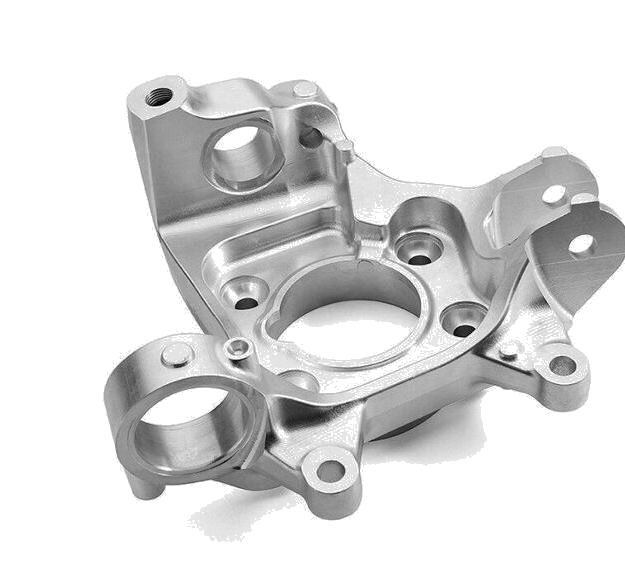
Swiss Screw Machining for High-Precision Small Component Production
When small, intricate components demand extreme accuracy, Swiss screw machining provides a highly controlled and efficient manufacturing solution. Using sliding headstock technology to support the workpiece near the cutting tool, this process minimizes vibration and deflection, allowing manufacturers to achieve tight tolerances and consistent quality across high-volume production runs.
Well-suited for components with long length-to-diameter ratios and complex geometries, Swiss screw machining enables multiple operations to be completed in a single setup. This reduces cycle times, improves workflow efficiency, and minimizes secondary operations while supporting scalable production from prototyping through full-volume manufacturing.
With the ability to machine a wide range of materials and optimize tooling strategies, Swiss screw machining enhances production consistency and overall manufacturability. By leveraging Swiss screw machining capabilities, manufacturers can maintain precision, improve throughput, and meet the performance demands of high-reliability applications.
Q: What is Swiss screw machining?
A: Swiss screw machining is a precision manufacturing process that uses sliding headstock lathes to produce small, complex components with tight tolerances and excellent repeatability.
Q: How does Swiss screw machining differ from conventional turning?
A: Unlike traditional turning methods, Swiss screw machining supports the workpiece near the cutting area, reducing vibration and improving dimensional accuracy.
Q: What types of parts are commonly produced using Swiss screw machining?
A: Precision fasteners, connectors, pins, shafts, and miniature components are frequently manufactured using Swiss screw machining.
Q: What industries rely on Swiss screw machining?
A: Aerospace, medical device manufacturing, electronics, defense, and industrial equipment production commonly use Swiss screw machining for high-precision parts.
Q: What materials can be used in Swiss screw machining?
A: Swiss screw machining supports materials such as aluminum, stainless steel, titanium, brass, and various engineered alloys.
Q: How does Swiss screw machining improve production efficiency?
A: By performing multiple operations in a single setup, Swiss screw machining reduces handling time, shortens cycle times, and improves throughput.
Q: Can Swiss screw machining support high-volume production?
A: Yes. Swiss screw machining is highly scalable and well suited for long production runs that require consistent part quality.
Q: What challenges are associated with Swiss screw machining?
A: Challenges include complex programming requirements, tight tooling tolerances, and the need for skilled operators to maintain precision.
Q: Why is repeatability important in Swiss screw machining?
A: Repeatability ensures each component meets the same dimensional and performance specifications, which is critical in precision manufacturing applications.
Q: How should manufacturers select a Swiss screw machining provider?
A: Manufacturers should evaluate technical expertise, equipment capabilities, quality certifications, and the provider’s ability to deliver reliable production results.
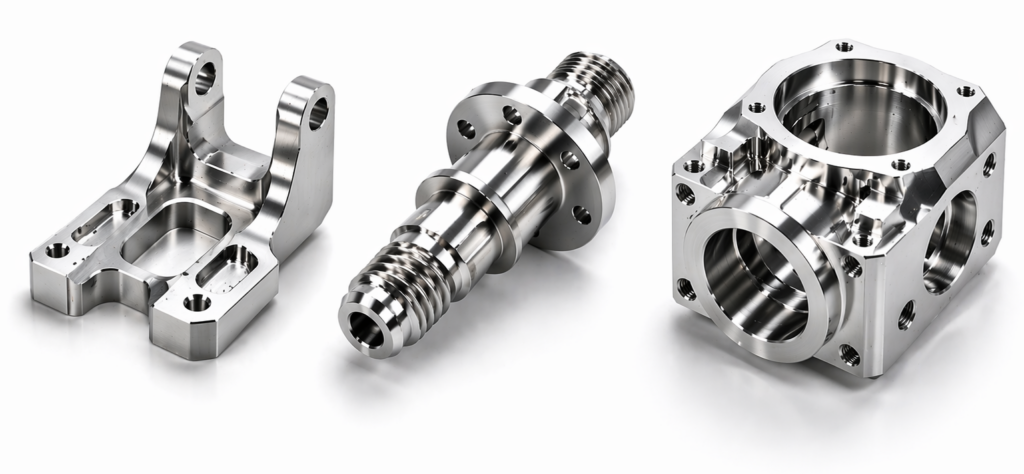
Precision CNC Machining
Precision CNC Machining for High-Accuracy Component Manufacturing
Precision and consistency are at the core of precision CNC machining, making it a critical solution for industries that require exacting standards and repeatable results. This process enables manufacturers to produce complex components with tight tolerances, refined finishes, and dependable performance across a wide range of applications.
Through multi-axis capabilities, precision CNC machining allows multiple operations to be completed within a single setup. This reduces handling, improves efficiency, and minimizes variation, helping ensure consistent quality from initial prototypes through full-scale production.
By supporting a broad range of materials and optimized tool paths, precision CNC machining improves manufacturability and production flexibility. Leveraging precision CNC machining capabilities allows manufacturers to maintain strict quality standards while scaling output to meet evolving production demands.
A: Precision CNC machining is a manufacturing process that uses computer-controlled equipment to produce components with extremely tight tolerances and high repeatability.
A: Industries such as aerospace and medical manufacturing require precise components that meet strict performance and safety standards, which precision CNC machining helps achieve.
A: Structural parts, housings, brackets, fasteners, and complex assemblies are often manufactured using precision CNC machining.
A: Materials include aluminum, titanium, stainless steel, hardened alloys, plastics, and other engineered materials used in precision applications.
A: Multi-axis capabilities and automated tool control help reduce setup time, improve throughput, and maintain consistent part quality.
A: Yes. Precision CNC machining is widely used for rapid prototyping, design validation, and scalable production.
A: Challenges include managing complex tool paths, maintaining tight tolerances, and ensuring process stability during long production runs.
A: Optimized tooling improves cutting efficiency, enhances surface finish quality, and supports reliable dimensional accuracy.
A: Repeatability ensures that each component meets the same specifications, which is essential for long-term product reliability and assembly performance.
A: Manufacturers should consider technical expertise, equipment capabilities, quality certifications, and the ability to deliver consistent results across production lifecycles.
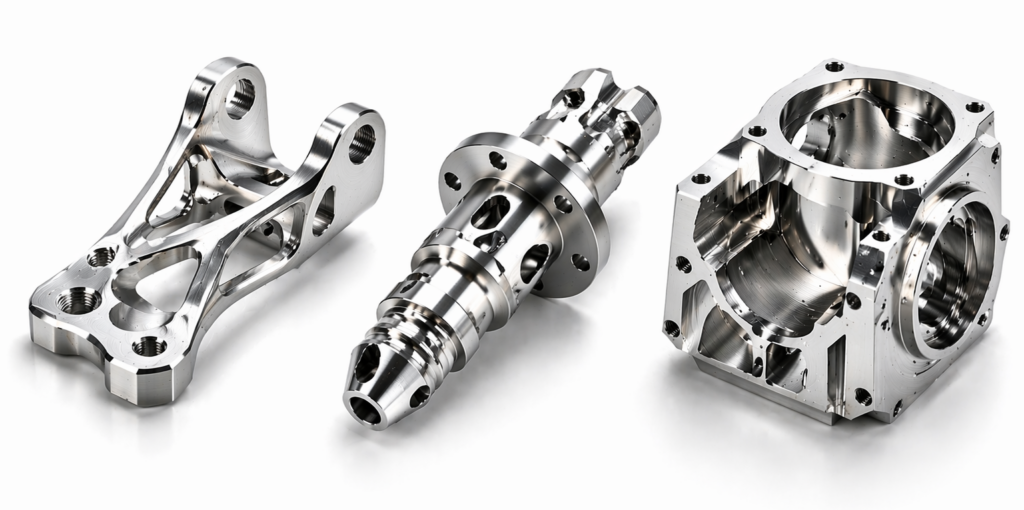
Multi Axis CNC Machining
Multi Axis CNC Machining for Complex Precision Manufacturing
When complex geometries and tight tolerances are required, multi axis CNC machining provides the flexibility and precision needed to produce high-performance components. By allowing cutting tools to move across multiple axes simultaneously, this process enables intricate parts to be manufactured in fewer setups while improving consistency and reducing handling time.
Modern multi axis CNC machining systems streamline production by completing multiple operations within a single cycle. This improves throughput, minimizes variation, and supports superior surface finishes, making it ideal for both prototype development and high-volume production across demanding industries.
With the ability to machine a wide range of materials and optimize tool paths, multi axis CNC machining enhances design freedom and overall manufacturability. By leveraging multi axis CNC machining capabilities, manufacturers can scale production while maintaining the precision, efficiency, and quality required for advanced applications.
A: Multi axis CNC machining is a manufacturing process that allows cutting tools to move along multiple axes at the same time, enabling the production of complex parts with high precision.
A: Traditional machining typically uses three axes and requires multiple setups, while multi axis CNC machining can complete more operations in a single setup, improving efficiency and accuracy.
A: Aerospace, medical device manufacturing, defense, and precision industrial sectors commonly rely on multi axis CNC machining for complex component production.
A: Materials include stainless steel, titanium, cobalt chrome alloys, medical-grade plastics, and other biocompatible materials.
A: Strict process controls, precision inspection methods, and validated machining procedures help ensure components meet healthcare industry standards.
A: Yes. Medical CNC machining is widely used for rapid prototyping, design validation, and scalable production programs.
A: Multi-axis machining capabilities reduce setup time, streamline workflows, and support consistent high-volume production.
A: Challenges include working with specialized materials, maintaining ultra-tight tolerances, and meeting strict documentation and certification requirements.
A: High-quality surface finishes are critical for device performance, sterilization, and patient safety in medical applications.
A: Manufacturers should evaluate technical expertise, quality certifications, material capabilities, and the provider’s experience in regulated healthcare manufacturing.
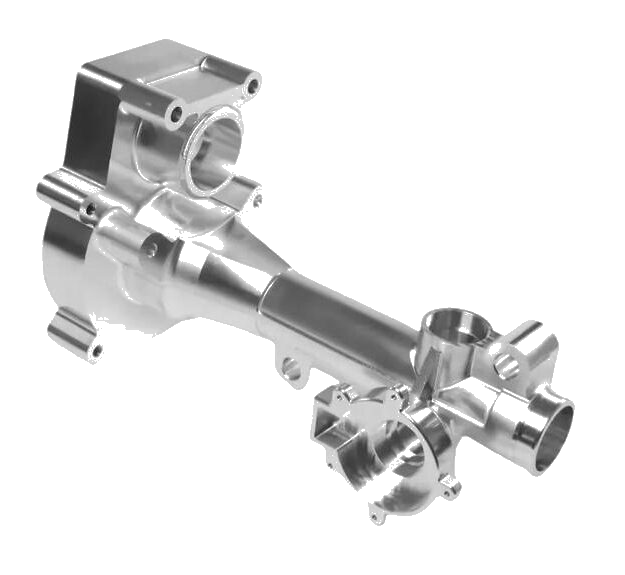
When tight tolerances and intricate geometries are required, CNC Swiss turning offers a highly controlled solution for small component manufacturing. By combining computer-controlled precision with sliding headstock technology, this process supports the workpiece close to the cutting zone, minimizing vibration and allowing for exceptional accuracy and surface finish across high-volume production.
Designed for parts with detailed features and high length-to-diameter ratios, CNC Swiss turning enables multiple operations within a single setup. This reduces cycle times, improves efficiency, and limits secondary processing while maintaining consistent quality throughout production runs.
With the ability to machine a wide range of materials and optimize tooling strategies, CNC Swiss turning enhances production consistency and overall manufacturability. By leveraging CNC Swiss turning capabilities, manufacturers can scale output while maintaining the precision and reliability required for demanding applications.
Q: What is CNC Swiss turning?
A: CNC Swiss turning is a precision machining process that uses sliding headstock lathes and computer-controlled operations to produce small, complex components with tight tolerances.
Q: How does CNC Swiss turning differ from conventional turning?
A: Unlike traditional turning methods, CNC Swiss turning supports the workpiece near the cutting area, reducing vibration and improving dimensional accuracy.
Q: What types of parts are best suited for CNC Swiss turning?
A: Components with small diameters, intricate geometries, and long length-to-diameter ratios are ideal for CNC Swiss turning.
Q: What industries commonly use CNC Swiss turning?
A: Aerospace, medical device manufacturing, electronics, and precision industrial sectors frequently rely on CNC Swiss turning for high-accuracy parts.
Q: What materials can be used in CNC Swiss turning?
A: CNC Swiss turning supports materials such as aluminum, stainless steel, titanium, brass, and various engineered alloys.
Q: How does CNC Swiss turning improve production efficiency?
A: By completing multiple machining operations in one setup, CNC Swiss turning reduces handling time, shortens cycle times, and improves throughput.
Q: Can CNC Swiss turning support high-volume manufacturing?
A: Yes. CNC Swiss turning is highly scalable and well suited for long production runs requiring consistent part quality.
Q: What challenges are associated with CNC Swiss turning?
A: Challenges include complex programming, tight tooling tolerances, and the need for skilled operators to maintain precision during extended production.
Q: Why is repeatability important in CNC Swiss turning?
A: Repeatability ensures each component meets the same dimensional and performance standards, which is critical in precision manufacturing applications.
Q: How should manufacturers select a CNC Swiss turning provider?
A: Manufacturers should evaluate technical expertise, equipment capabilities, quality certifications, and the provider’s ability to deliver consistent production results.
5 Axis CNC Machining
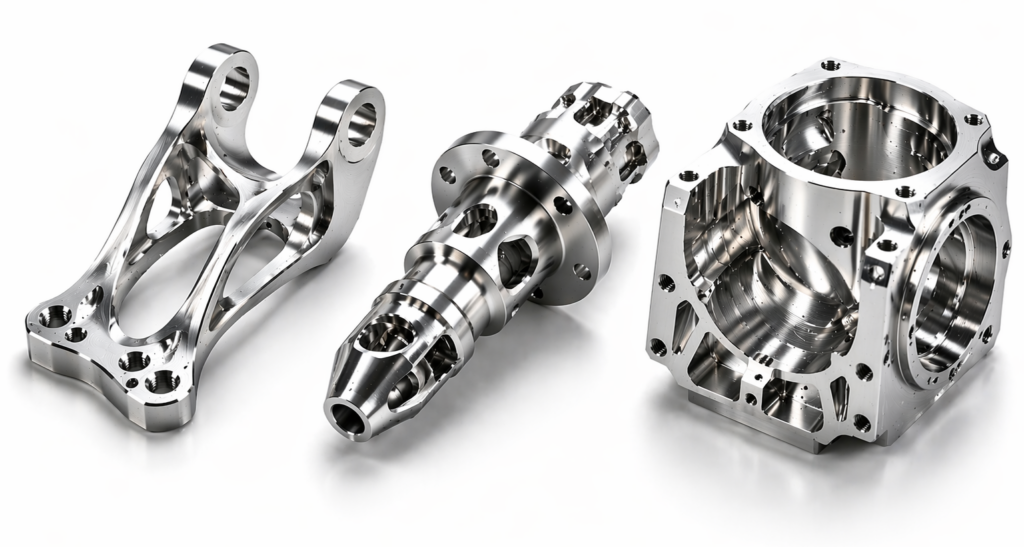
5 Axis CNC Machining for Complex High-Precision Component Production
When intricate geometries and multi-surface features are required, 5 axis CNC machining enables manufacturers to produce highly precise components with fewer setups and greater efficiency. By allowing cutting tools to move across multiple axes simultaneously, this process improves part consistency while reducing repositioning and handling.
Capable of machining complex surfaces, deep cavities, and multi-angled features, 5 axis CNC machining streamlines production workflows and improves throughput. Completing multiple operations within a single setup helps reduce cycle times, enhance surface finishes, and maintain consistent quality across both prototype and production runs.
With the flexibility to process a wide range of materials and optimize tool paths, 5 axis CNC machining enhances manufacturability and overall production efficiency. By leveraging 5 axis CNC machining capabilities, manufacturers can scale output while maintaining the precision and performance required for advanced applications.
A: 5 axis CNC machining is a manufacturing process that allows cutting tools to move along five different axes simultaneously, enabling the production of complex parts with high precision.
A: Traditional machining typically uses three axes and requires multiple setups, while 5 axis CNC machining can complete multi-surface operations in a single setup, improving efficiency and accuracy.
A: Aerospace, medical device manufacturing, defense, and advanced industrial sectors frequently rely on 5 axis CNC machining for precision component production.
A: 5 axis CNC machining supports materials such as aluminum, titanium, stainless steel, hardened alloys, and engineered plastics.
A: By reducing repositioning and enabling complex machining in one cycle, 5 axis CNC machining helps shorten cycle times and increase throughput.
A: Yes. 5 axis CNC machining is highly effective for producing complex prototypes and scaling to full production runs.
A: Challenges include advanced programming requirements, higher equipment costs, and the need for skilled operators to maintain precision.
A: Optimized tooling and tool path strategies improve cutting efficiency, surface finish quality, and dimensional consistency.
A: Repeatability ensures consistent component quality across production cycles, which is critical for performance and reliability.
A: Manufacturers should evaluate technical expertise, machining capabilities, quality certifications, and the ability to support complex long-term production programs.
High Precision Machining
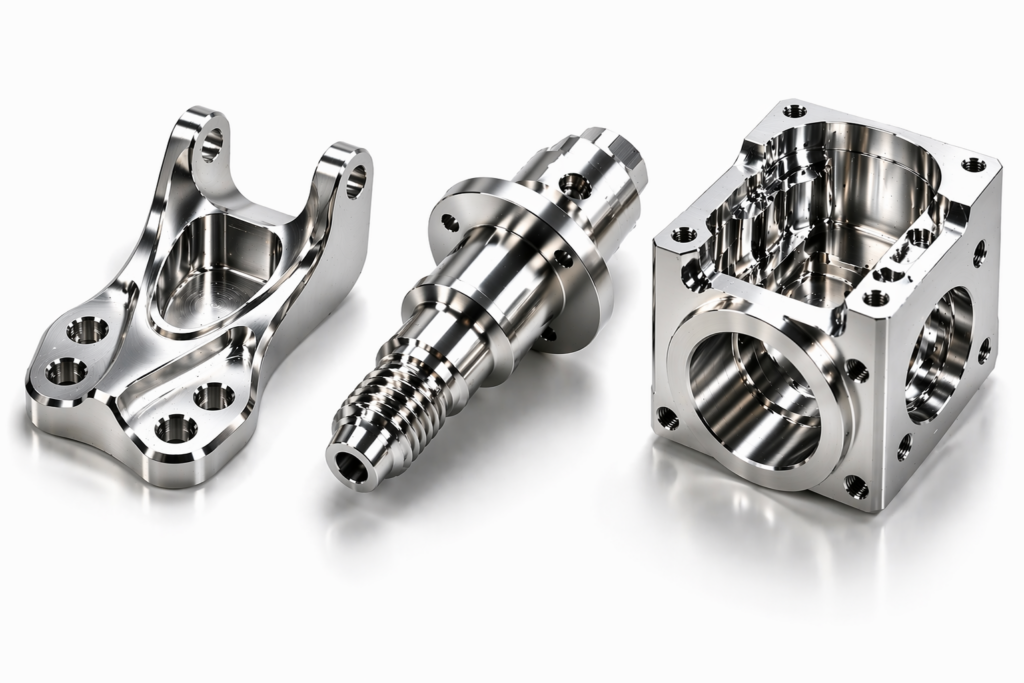
High Precision Machining for Critical Component Manufacturing
In applications where accuracy cannot be compromised, high precision machining ensures components meet exact specifications and consistent performance standards. This process supports tight tolerances, refined surface finishes, and reliable repeatability across industries such as aerospace, medical, defense, and advanced industrial manufacturing.
Through multi-axis capabilities and optimized tooling strategies, high precision machining enables complex geometries to be produced efficiently within a single setup. This reduces handling, minimizes variation, and improves workflow efficiency across both prototype development and high-volume production.
With the ability to process a wide range of materials and maintain strict process control, high precision machining enhances manufacturability and production flexibility. By leveraging high precision machining capabilities, manufacturers can scale output while maintaining the precision, consistency, and performance required for critical applications.
A: High precision machining is a manufacturing process used to produce components with extremely tight tolerances, high repeatability, and superior surface finish quality.
A: Industries such as aerospace and medical manufacturing require highly accurate components to ensure safety, performance, and long-term reliability.
A: Structural parts, housings, brackets, fasteners, and complex assemblies are frequently manufactured through high precision machining processes.
A: High precision machining supports materials such as aluminum, titanium, stainless steel, hardened alloys, plastics, and engineered metals.
A: Strict process controls, precision inspection methods, and validated machining procedures help ensure components meet healthcare industry standards.
A: Multi-axis capabilities and optimized machining strategies help reduce setup time, improve throughput, and maintain consistent part quality.
A: Yes. High precision machining is widely used for rapid prototyping, design validation, and scalable production requirements.
A: Challenges include managing complex tool paths, maintaining ultra-tight tolerances, and ensuring process stability during extended production runs.
A: Proper tooling selection improves cutting efficiency, enhances surface finishes, and supports reliable dimensional accuracy.
A: Repeatability ensures each component meets the same specifications, which is essential for assembly performance and product reliability.
A: Manufacturers should evaluate technical expertise, equipment capabilities, quality certifications, and the provider’s experience in precision manufacturing applications.
CNC Turning and Milling
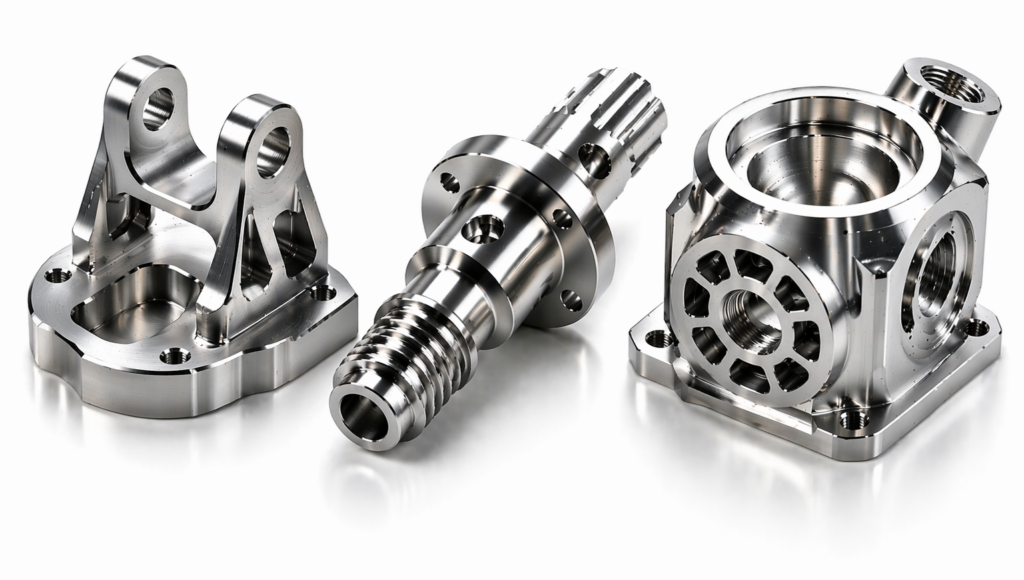
CNC Turning and Milling for Precision Component Manufacturing
Combining rotational and multi-axis cutting capabilities, CNC turning and milling enables manufacturers to produce complex components with high accuracy and consistent repeatability. This integrated approach allows for efficient material removal while maintaining tight tolerances and refined surface finishes across a wide range of applications.
By completing multiple operations within a single setup, CNC turning and milling reduces handling time and minimizes dimensional variation. Turning processes handle cylindrical features and profiles, while milling operations create flats, contours, and intricate details—working together to streamline production and improve overall efficiency.
With the flexibility to machine a wide range of materials and optimize tooling strategies, CNC turning and milling enhances manufacturability and production consistency. Leveraging CNC turning and milling capabilities allows manufacturers to scale output while maintaining the precision and performance required for demanding applications.
A: CNC turning and milling refers to precision machining processes that combine rotational cutting operations with multi-axis milling to produce complex components with tight tolerances.
A: Turning operations rotate the workpiece while a cutting tool shapes cylindrical features, while milling uses rotating tools to machine flat surfaces, contours, and detailed geometries.
A: Aerospace, medical device manufacturing, defense, automotive, and industrial equipment sectors commonly rely on CNC turning and milling for precision parts.
A: CNC turning and milling supports materials such as aluminum, stainless steel, titanium, brass, plastics, and engineered alloys.
A: By completing multiple machining operations in fewer setups, CNC turning and milling helps reduce cycle times, improve throughput, and maintain consistent part quality.
A: Yes. CNC turning and milling is widely used for rapid prototyping, design validation, and scalable production programs.
A: Shafts, housings, brackets, connectors, and complex assemblies are often manufactured through CNC turning and milling processes.
A: Challenges include complex programming requirements, tight tolerance control, and maintaining process stability during long production runs.
A: Proper tooling selection improves cutting efficiency, enhances surface finishes, and supports reliable dimensional accuracy.
A: Manufacturers should evaluate machining expertise, equipment capabilities, quality certifications, and the ability to deliver consistent production results.
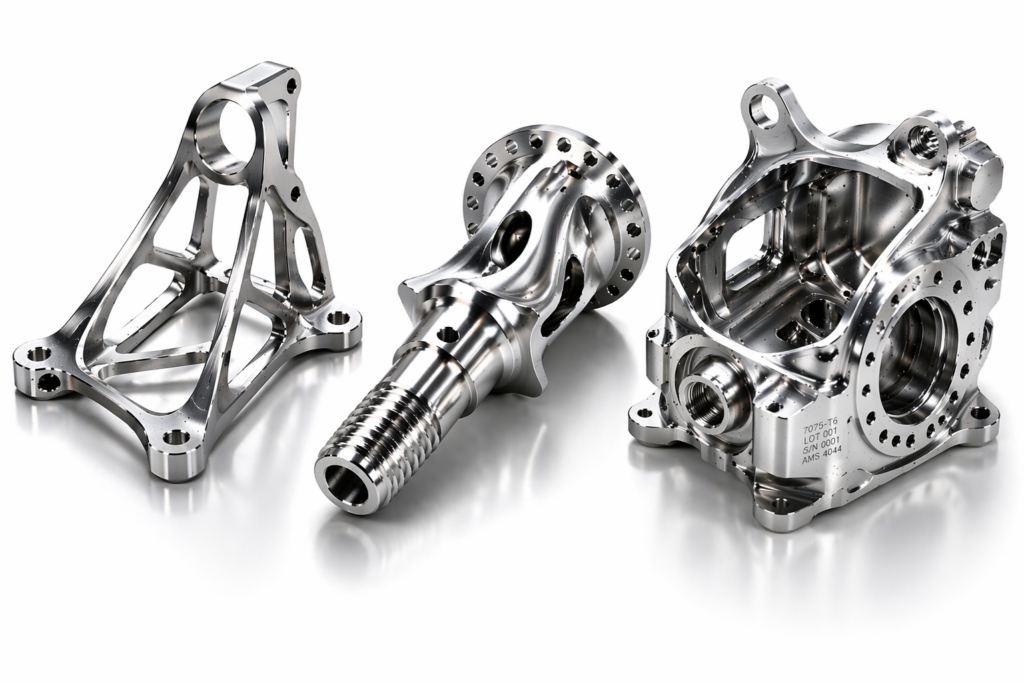
Aerospace CNC Machining
Improving Aerospace Production Efficiency with Aerospace CNC Machining
In aerospace applications where safety and precision are critical, aerospace CNC machining ensures components meet strict performance and dimensional standards. This process supports tight tolerances, refined surface finishes, and consistent repeatability for parts used in structural assemblies, propulsion systems, and avionics.
Utilizing multi-axis capabilities, aerospace CNC machining enables the efficient production of complex geometries and lightweight components within a single setup. This reduces handling, improves workflow efficiency, and minimizes variation across both prototype and high-volume production programs.
With the ability to machine advanced materials and maintain strict process control, aerospace CNC machining enhances production consistency and compliance with rigorous industry standards. By leveraging aerospace CNC machining capabilities, manufacturers can scale output while maintaining the reliability and performance required for aerospace applications.
A: Aerospace CNC machining is a precision manufacturing process that uses computer-controlled equipment to produce aircraft components with tight tolerances and high repeatability.
A: Aerospace components must meet strict safety and performance standards, making precision machining essential for maintaining structural integrity and reliability.
A: Structural brackets, housings, fasteners, engine components, and complex assemblies are commonly manufactured through aerospace CNC machining.
A: Materials such as aluminum alloys, titanium, stainless steel, and specialty high-strength metals are frequently processed using aerospace CNC machining.
A: Multi-axis machining capabilities help reduce setup time, streamline workflows, and support consistent high-volume manufacturing.
A: Yes. Aerospace CNC machining is widely used for rapid prototyping, design validation, and scalable production requirements.
A: Challenges include managing tight tolerances, working with complex materials, meeting certification requirements, and maintaining repeatability across production cycles.
A: Optimized tooling improves surface finishes, cutting efficiency, and dimensional accuracy during the machining process.
A: Repeatability ensures each component meets the same specifications, which is essential for aircraft safety and long-term performance.
A: Manufacturers should evaluate technical expertise, machining capabilities, quality certifications, and the provider’s experience supporting aerospace production programs.
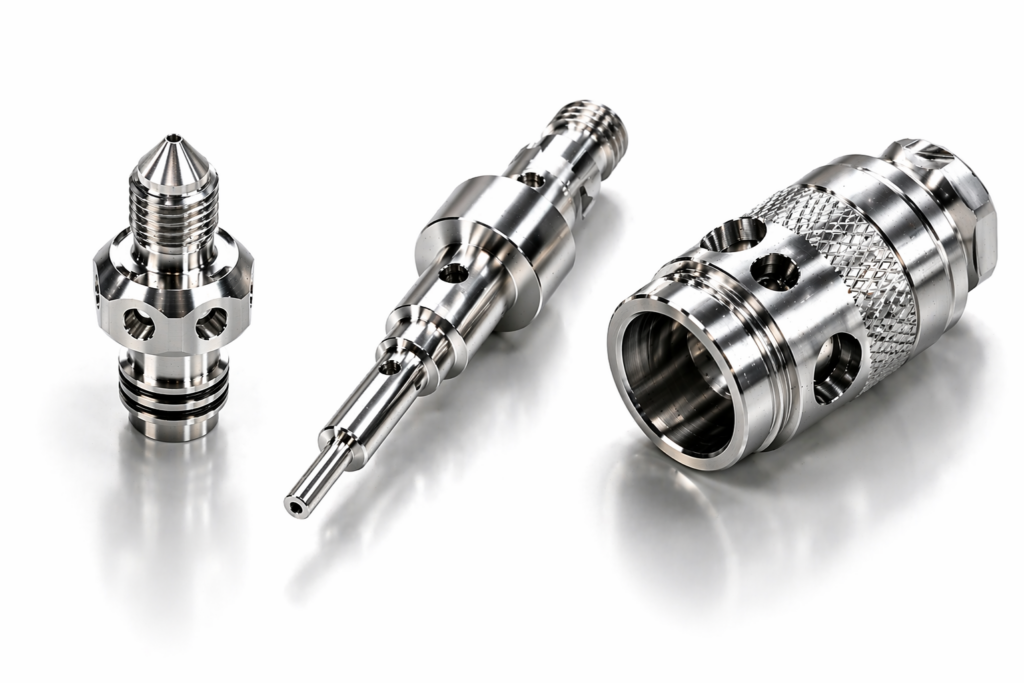
Swiss Machining
Producing Small, Complex Components with Advanced Swiss Machining
Designed for tight tolerances and fine detail work, Swiss machining enables the production of small, complex components with exceptional accuracy and repeatability. Using sliding headstock technology to support the workpiece near the cutting tool, this process minimizes vibration and ensures consistent quality across high-volume production.
Ideal for parts with long length-to-diameter ratios and intricate geometries, Swiss machining allows multiple operations to be completed in a single setup. This reduces cycle times, improves efficiency, and supports scalable production from prototype through full-volume manufacturing.
With the ability to machine a wide range of materials and optimize tooling strategies, Swiss machining enhances production consistency and overall manufacturability. By leveraging Swiss machining capabilities, manufacturers can maintain precision, reduce waste, and meet the performance demands of complex applications.
A: Swiss machining is a precision manufacturing process that uses sliding headstock lathes to produce small, complex components with tight tolerances and excellent repeatability.
A: Unlike conventional turning, Swiss machining supports the workpiece close to the cutting area, reducing vibration and improving dimensional accuracy.
A: Components with small diameters, intricate features, and long length-to-diameter ratios are ideal for Swiss machining processes.
A: Aerospace, medical device manufacturing, electronics, defense, and precision industrial sectors frequently rely on Swiss machining for high-accuracy parts.
A: Swiss machining supports materials such as aluminum, stainless steel, titanium, brass, and various engineered alloys.
A: By completing multiple operations in a single setup, Swiss machining helps reduce cycle times, improve throughput, and minimize secondary operations.
A: Yes. Swiss machining is highly scalable and can efficiently support both early-stage prototypes and long-term production programs.
A: Challenges include complex programming requirements, tight tooling tolerances, and the need for skilled operators to maintain precision.
A: Repeatability ensures that each component meets the same dimensional and performance specifications, which is essential for reliability.
A: Manufacturers should evaluate technical expertise, equipment capabilities, quality certifications, and the provider’s ability to deliver consistent production results.
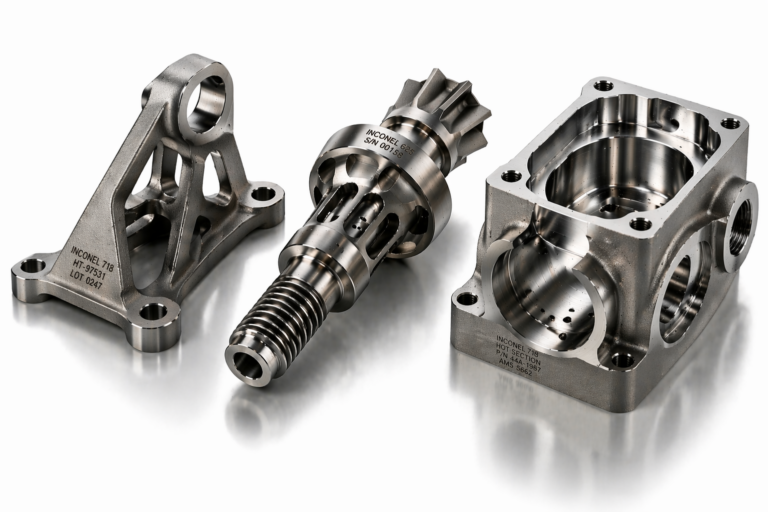
CNC Machining Inconel
Machining High-Performance Alloys with CNC Machining Inconel Expertise
Known for its strength and resistance to extreme environments, Inconel requires a specialized approach—making CNC machining Inconel essential for producing reliable, high-performance components. This process enables manufacturers to achieve tight tolerances and consistent surface finishes while working with materials designed for aerospace, energy, and defense applications.
Managing heat generation and tool wear is critical, and CNC machining Inconel relies on optimized cutting parameters, advanced tooling, and precise process control. Multi-axis capabilities allow complex geometries to be produced efficiently, reducing secondary operations and maintaining dimensional accuracy throughout production.
With the right expertise and machining strategies, CNC machining Inconel improves production consistency and overall manufacturability. By leveraging CNC machining Inconel capabilities, manufacturers can scale output while maintaining durability and performance in the most demanding operating conditions.
A: CNC machining Inconel is a precision manufacturing process used to machine nickel-based superalloys known for their strength, heat resistance, and corrosion resistance.
A: Inconel materials generate significant heat and cause rapid tool wear during cutting, making specialized CNC machining Inconel techniques necessary to maintain accuracy and efficiency.
A: Aerospace, energy, defense, and industrial equipment manufacturing commonly rely on CNC machining Inconel for high-performance components.
A: Turbine components, fasteners, housings, high-temperature brackets, and structural parts are often manufactured through CNC machining Inconel processes.
A: Specialized tooling materials and optimized cutting strategies help reduce wear, improve surface finish, and maintain dimensional accuracy.
A: Yes. Scalable CNC machining Inconel solutions can efficiently support both early design validation and high-volume production requirements.
A: Proper process control, advanced cooling methods, and multi-axis machining capabilities help increase throughput and reduce secondary operations.
A: Challenges include managing heat buildup, maintaining tool life, achieving tight tolerances, and ensuring process stability during extended production.
A: Repeatability ensures consistent component performance, which is essential in high-stress and high-temperature applications.
A: Manufacturers should evaluate technical expertise, machining capabilities, material experience, and quality certifications when selecting a provider.
Materials
C101
C102
C110
C145
C182
C172
C173
C314
C335
C360
C385
C464
C485
Inconel 600
Inconel 617
Inconel 625
Inconel 690
Inconel 718
Inconel X-750
Nickel 200
Nickel 201
Nickel 230
Titanium
301
302
303
304
304L
309
316
316L
321
408
409
410
416
420
430
440
630 (17-4 PH)
S155 (15-4PH)
1006
1005
1008
1010
1017
1018
Mu-metal®
Aluminum
Copper
Monel®
Nickel
Brass
Tantulum
Waspaloy®
Haynes®
Haynes® 282 phosphor
Bronze
MULTI-AXIS TOLERANCES
| 3-Axis with Trunnion | 5-Axis High-Precision | 3-Axis with Rotary |
3 Axis Work Envelope (in) | 64″ x 32″ x 30″ (X, Y, Z) | N/A | 19.68″ x 15.74″ x 12.9″ (X, Y, Z) |
Max Part Weight (lb.) | 2,000 | N/A | 660 |
5 Axis Work Envelope (in.) | 19″ x 18″ (Dia, Length) | 7.87″ x 6.2″ (Dia, Length) | 11″ x 14″ (Dia, Length) |
Max Part Weight (lb.) | 200 | 33 | 220 |
Spindle RPM (min-1) | 12,000 | 40,000 | 10,000 |
Spindle Power (HP) | 30 (Cont.) | 10 (Cont.) | 15, 5 (Peak, Cont.) |
Spindle Torque (ft-lb) | 22.4 (Cont.) | 1.3 (Cont.) | 39 (Peak) |
Surface Finish Min (Ra) | 12 | <1 | 2 |
Accuracy (in.) | 0.0001 | 0.00002 | 0.0002 |
Repeatability (in.) | 0.0001 | 0.00002 | 0.000078 |
CNC TURNING CAPABILITIES
Work Envelope (in.) | 14.17″ x 23.6″ (Dia, Length) |
Main Spindle RPM (min-1) | 3,500 |
Main Spindle Power (HP) | 30 (Peak), 25 (Cont.) |
Main Spindle Torque (ft-lb) | 369 (Peak), 310 (Cont.) |
Sub Spindle RPM (min-1) | 5,000 |
Sub Spindle Power (HP) | 20 (Peak), 15 (Cont.) |
Sub Spindle Torque (ft-lb) | 92 (Peak), 51 (Cont.) |
Live Tool Spindle RPM (min-1) | 6,000 |
Live Tool Spindle Power (HP) | 10 (Peak), 5 (Cont.) |
Live Tool Spindle Torque (ft-lb) | 30 (Peak), 13 (Cont.) |
FINISHES
INSPECTION FINISH CAPABILITY
Ra ≤ 1 µin on 5-Axis High-Precision systems


Sitemap | Privacy Policy | Cookie Policy | Terms of Service | Copyright © 2026. | All Rights Reserved
Start Your Quote Today!
"*" indicates required fields