Tight Tolerances
Controlled tooling, material behavior, burr height, edge quality, and feature location.
At PrecisionX Manufacturing, we produce precision-stamped components for industries that demand accuracy, repeatability, and dependable production quality. Our team combines engineered tooling, controlled press operations, and material expertise to manufacture complex metal parts that meet strict dimensional and performance requirements across medium- and high-volume programs.
Controlled tooling, material behavior, burr height, edge quality, and feature location.
Stable processes built to produce consistent geometry across long production runs.
Die design, build, validation, production, and maintenance under one manufacturing partner.
Efficient medium- to high-volume manufacturing with reduced handling and secondary work.
Precision stamping is used to manufacture highly accurate metal components with consistent dimensions and repeatable quality. At PrecisionX Manufacturing, our precision stamping capabilities support aerospace, medical, electronics, defense, and industrial applications where variation cannot be tolerated.
Unlike general stamping, precision stamping emphasizes tight tolerances, material control, and process repeatability. Our team evaluates material thickness, grain direction, forming stresses, and burr control to ensure stamped parts maintain dimensional accuracy and structural integrity.
Our precision stamping process supports stainless steel, copper alloys, nickel alloys, aluminum, and specialty metals. By combining progressive dies, compound tooling, and high-precision presses, we help customers reduce secondary operations, improve production stability, and maintain long-term part consistency.
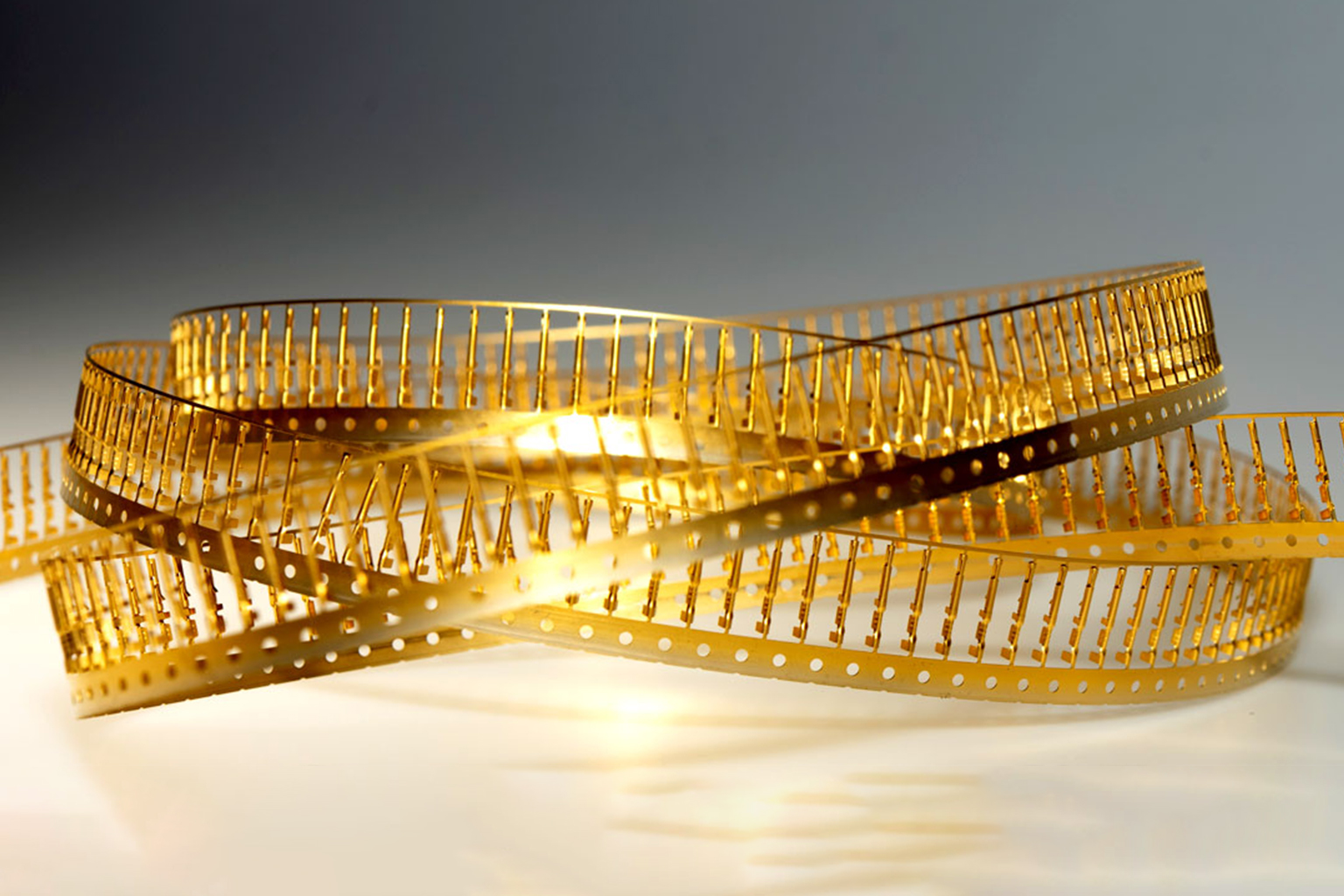
Engineered tooling and controlled press operations support complex geometries, tight feature placement, stable output, and efficient production across demanding applications.

Highly accurate metal components with consistent dimensions, tight tolerances, and repeatable quality.
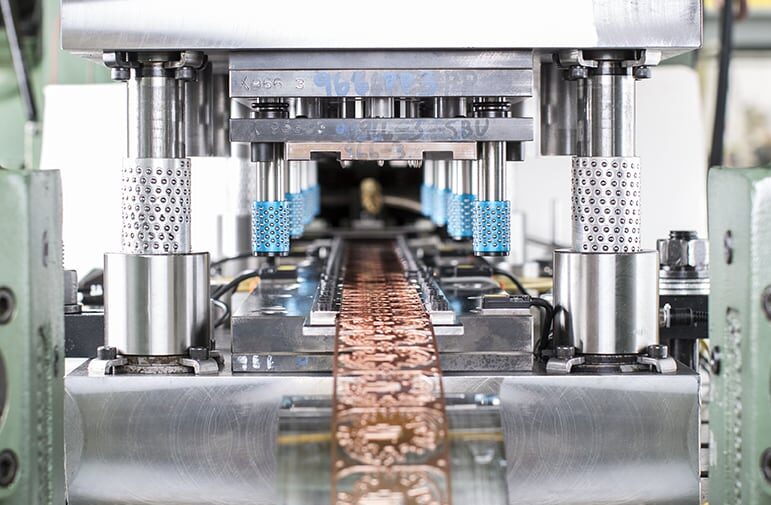
Continuous, multi-stage production that pierces, trims, forms, and cuts complex parts in one process.

Precision tooling engineered around part geometry, material behavior, tolerances, and production volume.
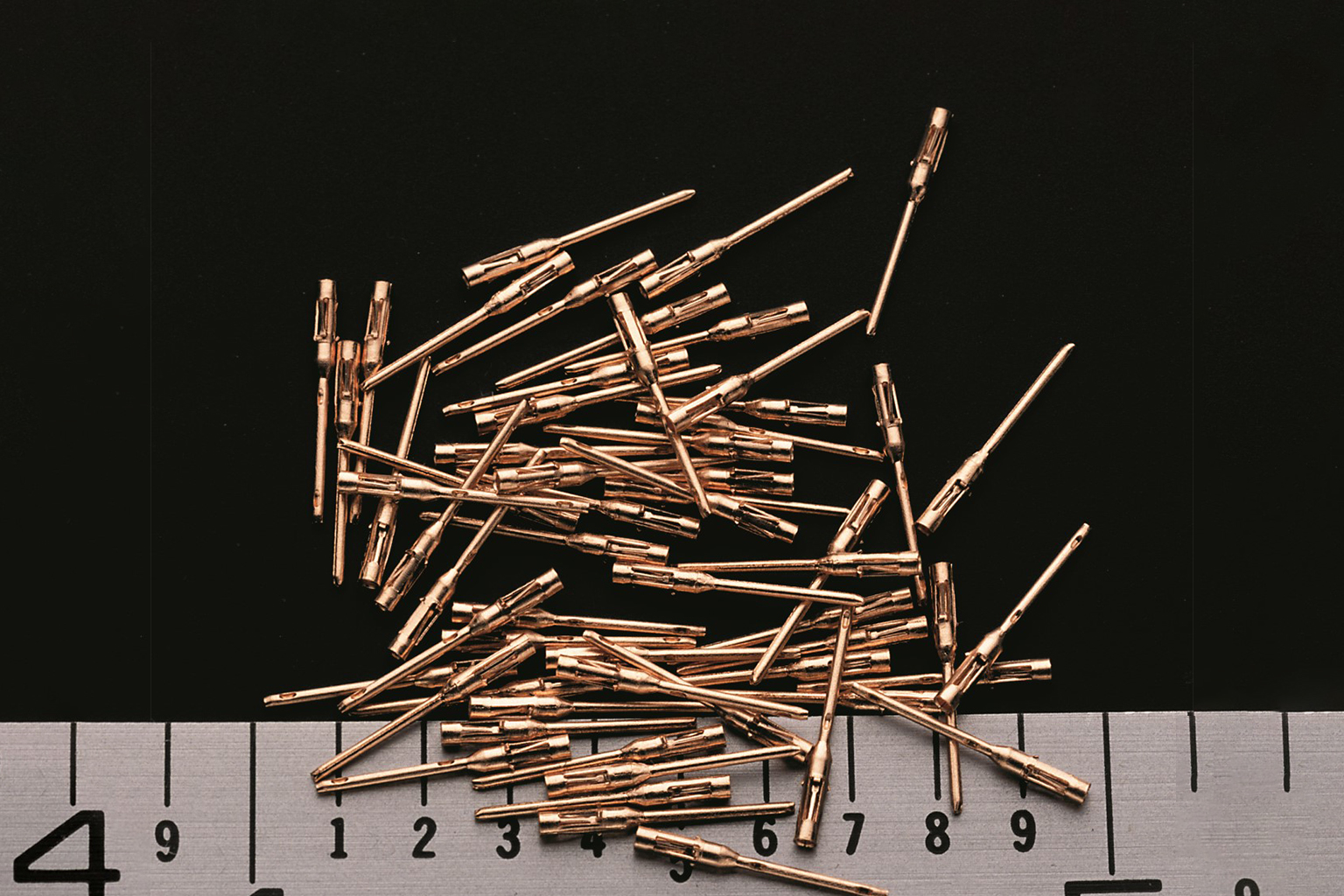
Controlled process stability for fine features, tight hole locations, formed sections, and dependable fit.
PrecisionX aligns part geometry, material behavior, tooling strategy, press setup, validation, and maintenance to reduce manufacturing risk and support dependable supply.
Evaluate drawings, CAD models, materials, tolerances, forming stresses, feature geometry, and production volume.
Develop clearances, forming radii, station layouts, strip progression, material flow, and serviceable die architecture.
Use prototype and pre-production runs to verify fit, function, dimensional performance, and process stability.
Maintain repeatable output through controlled press operations, inspection, tooling maintenance, and process monitoring.
PrecisionX supports multiple forming and cutting operations, a wide range of engineered metals, and precision components that require reliable assembly fit and long-term performance.
Process selection is based on geometry, material behavior, tolerance requirements, and production volume.
Create accurate outer profiles and starting geometries.
Produce repeatable holes, slots, and detailed internal features.
Control bends, tabs, radii, and three-dimensional features.
Form localized details and controlled surface features.
Combine sequential operations within one automated die.
Protect accuracy, uptime, and long-term production stability.

Precision stamping supports programs where dimensional consistency, controlled material behavior, assembly fit, production stability, and dependable component performance are essential.

Precision components for demanding assemblies and high-reliability systems.

Repeatable stamped parts where fit, function, and quality consistency matter.

Contacts, terminals, clips, shields, and fine-feature components.

Controlled manufacturing for dependable, mission-critical applications.

Scalable component production for long-term manufacturing programs.

Leading precision stamping programs require more than press capacity. They require disciplined tooling engineering, controlled manufacturing, ongoing maintenance, and a supply partner focused on long-term process stability.
Send us your drawing, CAD model, material specification, tolerance requirements, and production goals. Our technical sales and engineering teams will review the best path forward.
The complete supplied copy is organized into searchable capability sections and accessible FAQ accordions. This keeps the landing-page experience focused while preserving every technical topic and answer.
Precision stamping is used to manufacture highly accurate metal components with consistent dimensions and repeatable quality. At PrecisionX Manufacturing, our precision stamping capabilities support aerospace, medical, electronics, defense, and industrial applications where variation cannot be tolerated.
Unlike general stamping, precision stamping emphasizes tight tolerances, material control, and process repeatability. Our team evaluates material thickness, grain direction, forming stresses, and burr control to ensure stamped parts maintain dimensional accuracy and structural integrity.
Our precision stamping process supports stainless steel, copper alloys, nickel alloys, aluminum, and specialty metals. By combining progressive dies, compound tooling, and high-precision presses, we help customers reduce secondary operations, improve production stability, and maintain long-term part consistency.
Discuss this capabilityPrecision stamping is a metal forming process that uses engineered dies and controlled press equipment to produce metal parts with tight tolerances and consistent repeatability.
Standard metal stamping focuses on shaping metal, while precision stamping emphasizes tight tolerances, repeatability, and controlled material behavior.
Precision stamping is commonly used in aerospace, medical devices, electronics, electrical connectors, defense components, automotive systems, and industrial equipment.
Precision stamping supports stainless steel, aluminum, copper alloys, brass, nickel alloys, and other engineered metals.
Precision stamping can often achieve tolerances within a few thousandths of an inch, depending on material thickness, geometry, and tooling design.
Yes. Precision stamping is ideal for medium- to high-volume production because tooling allows parts to be produced rapidly with consistent quality.
Yes. Progressive dies and engineered tooling can produce intricate features, formed sections, tabs, and fine details.
Many parts can be designed to reduce or eliminate secondary operations, though plating, heat treating, or deburring may be needed depending on the application.
Progressive die stamping is a high-efficiency process that produces finished components through a continuous sequence of forming, cutting, and shaping operations. At PrecisionX Manufacturing, our progressive die stamping capabilities allow complex parts to be manufactured at high speed while maintaining tight tolerances and consistent quality.
The main advantage of progressive die stamping is scalability. Instead of transferring parts between multiple machines, strip material advances through engineered tooling that pierces, trims, forms, and cuts features in one continuous process.
Our engineering team designs tooling specifically for progressive die stamping, accounting for material behavior, strip layout, station sequencing, and burr control. This allows us to produce electrical contacts, connectors, clips, terminals, brackets, and small mechanical components with repeatable accuracy and low per-piece cost.
Discuss this capabilityProgressive die stamping is a manufacturing process where a strip of metal moves through several stations inside one die, with each station performing a different operation.
A coil of metal feeds into a stamping press, advances through multiple tooling stations, and is pierced, cut, and formed step-by-step until the finished component is separated.
Progressive die stamping offers high production speed, consistent quality, reduced handling, minimal secondary machining, and lower per-piece cost.
It is best for medium- to high-volume production volumes, complex parts, tight tolerances, and components requiring repeatability.
Common parts include electrical terminals, connectors, clips, brackets, contacts, shields, springs, and small mechanical components.
Stainless steel, copper alloys, brass, aluminum, phosphor bronze, nickel alloys, and other engineered metals can be used.
Yes. Although tooling requires upfront investment, it reduces per-part cost over long production runs.
Many secondary operations can be reduced or eliminated because forming, piercing, and shaping occur within the same die.
With proper tooling and process control, progressive die stamping can maintain tight tolerances across large production quantities.
Metal stamping dies are specialized tools used inside stamping presses to cut, form, and shape metal into finished components. At PrecisionX Manufacturing, our metal stamping dies are engineered to support precision, repeatability, and high-volume production stability.
A metal stamping die functions as a controlled forming system, using punches, cavities, and forming features to pierce holes, trim profiles, and create bends as the press cycles. Proper die design helps prevent distortion, control burr formation, and reduce scrap.
PrecisionX develops metal stamping dies for progressive die stamping, blanking, forming, and complex production programs. Using hardened tool steels, wear-resistant surfaces, and serviceable tooling designs, we help customers maintain reliable supply and consistent part performance.
Discuss this capabilityMetal stamping dies are custom tools installed inside a stamping press that cut and form metal into a specific shape.
A die uses punches and forming surfaces to pierce, trim, or form metal sheet or strip as the press closes.
Yes. Each metal stamping die is engineered for a specific part design, material type, thickness, and production volume.
With proper design and maintenance, metal stamping dies can operate for hundreds of thousands to millions of cycles.
Dies can perform blanking, piercing, bending, forming, embossing, and shaping operations.
Aerospace, electronics, medical devices, automotive, electrical components, and industrial manufacturers use metal stamping dies.
Common materials include stainless steel, aluminum, copper alloys, brass, nickel alloys, and other engineered metals.
Yes. Once built, dies allow rapid, repeatable manufacturing with consistent quality and lower per-part cost.
Metal stamping is a manufacturing process that cuts and forms flat metal into precise components using specialized tooling and press equipment. At PrecisionX Manufacturing, our metal stamping capabilities support aerospace, medical, electronics, defense, and industrial applications where accuracy and repeatability are essential.
The metal stamping process uses engineered dies to pierce holes, trim edges, and form features as sheet or coil metal moves through the press. Because the process is controlled and repeatable, thousands of identical parts can be produced quickly while maintaining consistent geometry.
PrecisionX supports metal stamping operations including blanking, forming, piercing, and progressive die stamping. Our tooling engineering and process development help reduce secondary machining, lower per-piece cost, and improve assembly reliability.
Discuss this capabilityMetal stamping is a manufacturing process that uses a stamping press and tooling to cut and shape flat metal into specific parts.
Metal is fed into a press where a custom die performs cutting, piercing, and forming operations during each press cycle.
Metal stamping produces brackets, terminals, connectors, clips, shields, electrical contacts, housings, and other precision metal components.
Common materials include stainless steel, aluminum, copper alloys, brass, nickel alloys, and other engineered metals.
Aerospace, electronics, medical devices, automotive, electrical equipment, and industrial manufacturers commonly use metal stamping.
Yes. Metal stamping is highly efficient for medium- to high-volume production volumes.
Yes. Properly designed tooling can create small holes, formed tabs, bends, and precise profiles.
Many parts require little or no machining, though finishing operations may be needed depending on the application.
Benefits include high production speed, consistent quality, tight tolerances, reduced handling, and lower per-part cost.
Companies searching for precision metal stamping companies need more than basic production. PrecisionX Manufacturing provides precision metal stamping solutions for aerospace, medical, electronics, defense, and industrial customers that require strict dimensional control and dependable component performance.
What separates leading precision metal stamping companies is engineering capability. Our team reviews customer drawings, material behavior, forming stresses, and tolerance requirements to develop tooling and processes that maintain repeatable part quality.
PrecisionX offers the capabilities expected from advanced precision metal stamping companies, including progressive die stamping, precision tooling, and controlled press operations. We help customers maintain predictable lead times, stable production methods, and long-term supply confidence.
Discuss this capabilityKey factors include engineering support, tooling capability, tolerance control, quality consistency, and experience with similar materials and applications.
Aerospace, medical devices, electronics, defense, automotive, and industrial equipment manufacturers commonly use precision metal stamping companies.
Precision metal stamping companies focus on tight tolerances, repeatability, and controlled processes rather than simple part production.
Yes. Many provide design review and manufacturability recommendations to improve performance and reduce production risk.
Common materials include stainless steel, aluminum, copper alloys, brass, and specialty metals.
Yes. Prototype and pre-production runs allow validation before full-scale manufacturing.
Quality is maintained through precision tooling, controlled press operations, inspection procedures, and tooling maintenance.
Yes. Precision metal stamping is ideal for medium- to high-volume manufacturing.
For many parts, stamping provides faster production, consistent quality, and lower per-piece cost once tooling is developed.
Custom metal stamping services are designed for manufacturers that need components built around exact drawings, CAD models, or performance requirements. PrecisionX Manufacturing develops stamping solutions that support assembly fit, durability, and long-term reliability.
Our custom metal stamping services begin with engineering and tooling development. We evaluate material selection, thickness, tolerances, and feature requirements to determine the most efficient stamping process while reducing secondary operations where possible.
PrecisionX provides custom metal stamping services including blanking, forming, piercing, progressive die stamping, prototyping, process validation, and production optimization. This creates a stable supply of parts that meet specifications from the first production run through long-term manufacturing.
Discuss this capabilityCustom metal stamping services involve designing and manufacturing metal components according to a customer’s drawings, tolerances, and performance requirements.
Customers typically provide drawings, CAD files, material specifications, quantities, and tolerance requirements.
Yes. Prototype and pre-production runs allow customers to validate fit and function before full production.
Stainless steel, aluminum, copper alloys, brass, phosphor bronze, and specialty metals can be used.
Yes. Once tooling is developed, custom metal stamping is efficient for medium-to-high production quantities.
Precision tooling and controlled press operations allow tight tolerances and repeatable geometry.
Yes. Progressive dies and engineered tooling can create intricate features, small holes, bends, and formed sections.
In many applications, stamping lowers per-part cost compared to machining once tooling is built.
Secondary processes such as plating, heat treating, or finishing can be incorporated depending on requirements.
Progressive stamping produces metal components through sequential operations performed within one specialized die. As strip material feeds through the tooling, each press cycle performs an operation such as piercing, forming, trimming, or bending until the finished component is produced.
The advantage of progressive stamping is efficiency. Because all required features are created during one continuous press operation, the process reduces handling, improves repeatability, and supports large quantities of identical parts.
At PrecisionX Manufacturing, our progressive stamping capabilities support multi-feature components with tight tolerances. By engineering tooling layouts around material movement and part geometry, we help maintain dimensional accuracy, reduce secondary operations, and lower per-part cost.
Discuss this capabilityProgressive stamping is a metal forming process where strip material moves through multiple stations in a single die until the finished part is produced.
A coil or strip of metal feeds through a stamping press, with each press stroke advancing the material to the next station.
Progressive stamping is best for medium- to high-volume production volumes and parts requiring multiple forming or cutting operations.
Electrical contacts, connectors, brackets, clips, terminals, and precision-formed components are commonly made with progressive stamping.
Stainless steel, aluminum, copper alloys, brass, and other engineered metals can be used.
Yes. Although tooling requires upfront development, progressive stamping lowers per-part cost over production runs.
With properly designed tooling, progressive stamping can maintain tight tolerances and consistent feature placement.
Many parts can be fully formed within the die, reducing or eliminating additional processing.
The process is ideal for repeat production where thousands to millions of identical parts are required.
Manufacturers comparing metal stamping companies are often looking for a supplier that can produce accurate components across long production runs. PrecisionX Manufacturing supports customers that require engineered tooling, controlled processes, and repeatable production for critical applications.
Leading metal stamping companies provide more than basic part production. Our team supports design review, tooling development, and process planning to ensure parts can be manufactured efficiently while maintaining performance requirements.
PrecisionX operates as a full-service partner among modern metal stamping companies, offering progressive stamping, forming, blanking, and piercing operations. By controlling tooling maintenance and press processes, we help customers maintain reliable supply and consistent assembly performance.
Discuss this capabilityMetal stamping companies manufacture metal components by cutting and forming sheet or coil metal using stamping presses and custom tooling.
Common parts include brackets, clips, connectors, electrical contacts, terminals, housings, and formed metal components.
Evaluate engineering support, tooling capability, tolerance control, quality systems, and experience with your material and application.
Many provide manufacturability review and recommend design adjustments to improve production efficiency and part performance.
Stainless steel, aluminum, brass, copper alloys, and other engineered metals are commonly used.
Yes. Metal stamping is efficient for medium-to-high production quantities.
Many support prototype or pre-production runs to validate fit and function before full production.
Specialized manufacturers maintain tighter tolerances, better repeatability, and improved quality control.
Yes. Compared to machining in certain applications, stamping can lower per-part cost and improve production speed.
A progressive die is a specialized metal stamping tool that produces components through sequential forming and cutting operations. Each station performs a step such as piercing, trimming, bending, or forming as strip metal advances through the die.
The purpose of a progressive die is to combine multiple manufacturing operations into one continuous process. This reduces part handling, improves repeatability, and allows large quantities of identical components to be produced efficiently.
At PrecisionX Manufacturing, every progressive die is engineered around part geometry, material behavior, and tolerance requirements. Proper die design helps maintain hole location, edge quality, formed angles, and stable output throughout long production runs.
Discuss this capabilityA progressive die is a multi-station stamping tool that performs several cutting and forming operations as metal strip moves through a press.
With each press stroke, the material advances to the next station where another operation occurs until the finished component is separated.
Common operations include piercing, blanking, trimming, bending, forming, and coining.
The die determines part accuracy, repeatability, and production speed.
Progressive dies are best for medium- to high-volume parts that require multiple features or forming steps.
Stainless steel, aluminum, copper alloys, brass, and other sheet metals can be processed.
Yes. Although tooling requires upfront investment, it lowers per-part cost by reducing labor, handling, and secondary operations.
With proper maintenance, progressive dies can support very long production runs.
No. A single-operation die performs one process per press stroke, while a progressive die performs multiple operations in sequence.
Custom metal stamping dies are precision tools designed specifically for a customer’s component. At PrecisionX Manufacturing, we develop custom metal stamping dies from part drawings, CAD models, and performance requirements to achieve consistent quality and reliable production.
Our engineering team evaluates material thickness, tolerances, feature geometry, and production volume when designing custom metal stamping dies. We define clearances, forming radii, and station layouts to control material flow and reduce distortion during stamping.
PrecisionX designs custom metal stamping dies for progressive stamping, forming, blanking, and complex multi-stage operations. With hardened tool steels, wear-resistant surfaces, and serviceable components, our dies are built for extended production cycles and predictable part quality.
Discuss this capabilityCustom metal stamping dies are specialized tools engineered for a customer’s part design.
Custom dies help the part meet exact dimensional and functional requirements while improving repeatability and assembly fit.
Drawings or CAD files, material specifications, tolerances, and production quantity expectations are typically required.
Yes. Custom dies are often required for tight tolerances, intricate features, formed tabs, and multiple operations.
With proper design and maintenance, they can operate for hundreds of thousands to millions of press cycles.
There is an upfront tooling investment, but they can significantly reduce per-part manufacturing cost over production runs.
Yes. Properly engineered tooling can incorporate multiple forming steps within the die.
Stainless steel, aluminum, copper alloys, brass, and specialty metals can be processed.
Yes. Routine inspection, sharpening, and adjustments help maintain accuracy and extend tool life.
High precision stamping is used when components must meet strict dimensional tolerances and consistent performance requirements. At PrecisionX Manufacturing, our high precision stamping capabilities support applications where even small variation can affect fit, function, or reliability.
Unlike general stamping, high precision stamping focuses on repeatability and process stability. We control material thickness, forming pressure, tooling alignment, burr height, edge quality, and feature location to maintain consistent results.
Our high precision stamping services support complex parts with fine features, tight hole locations, and formed sections. Through tooling development, inspection, and process monitoring, we help customers maintain dependable component performance across long-term production programs.
Discuss this capabilityHigh precision stamping produces metal components with tight tolerances and consistent repeatability using engineered tooling and controlled press operations.
High precision stamping focuses on strict dimensional accuracy, controlled material behavior, and consistent results.
Depending on material and geometry, it can often maintain tolerances within a few thousandths of an inch or better.
Aerospace, medical devices, electronics, electrical connectors, defense, and high-performance industrial equipment use high precision stamping.
Stainless steel, aluminum, brass, copper alloys, nickel alloys, and other engineered metals are commonly used.
Yes. Proper tooling design allows intricate features, tight hole locations, and formed components to be produced without machining.
Yes. Once tooling is developed, the process supports efficient medium- to high-volume production.
In many applications, stamping reduces per-part cost compared to machining while maintaining accuracy.
Quality is maintained through engineered tooling, controlled press setup, inspection procedures, and ongoing maintenance.
Companies searching for progressive die manufacturers are often developing a new part or transitioning production to a more efficient process. PrecisionX Manufacturing engineers and builds progressive dies that support stable manufacturing, part accuracy, and long-term reliability.
Experienced progressive die manufacturers focus heavily on tooling engineering. Our team analyzes part geometry, material behavior, tolerance requirements, strip progression, and forming sequences to control material movement and reduce distortion.
As a full-service partner among progressive die manufacturers, PrecisionX supports the tooling lifecycle from design and build through production and maintenance. Our dies are built for extended runs, consistent feature placement, and dependable supply.
Discuss this capabilityProgressive die manufacturers design and build multi-station stamping tools for continuous metal forming.
The quality of the die determines part accuracy, repeatability, and production stability.
Aerospace, medical, electronics, electrical connector, automotive, and industrial equipment manufacturers commonly require progressive die tooling.
Part drawings, CAD files, material specifications, tolerances, and estimated production quantities are typically needed.
Lead times vary depending on complexity and include design, machining, assembly, and validation.
Many progressive die manufacturers, including PrecisionX Manufacturing, both build the die and run production stamping.
Stainless steel, aluminum, copper alloys, brass, and other sheet metals can be used.
With proper maintenance, progressive dies can support very long production runs.
Benefits include better tooling design, reduced scrap, consistent tolerances, improved efficiency, and long-term supply reliability.
Precision die & stamping combines the design of precision tooling with the production of stamped metal components. At PrecisionX Manufacturing, we support both die engineering and part production, allowing tighter control over dimensional accuracy, repeatability, and long-term stability.
In precision die & stamping applications, the die determines final part quality. Our tooling layouts control material flow, maintain hole location accuracy, and support consistent formed features for assemblies that require reliable fit and function.
Our precision die & stamping capabilities include progressive die stamping, forming, blanking, and multi-stage operations. By managing tooling, production, prototyping, validation, and maintenance in one facility, we help reduce risk and improve communication throughout the project.
Discuss this capabilityPrecision die & stamping means a supplier designs and builds the stamping die and produces the stamped metal components using that tooling.
When one manufacturer handles both, tolerances, repeatability, and production issues can be controlled more effectively.
Connectors, electrical contacts, clips, brackets, terminals, and precision-formed components are commonly made.
Stainless steel, aluminum, brass, copper alloys, and specialty metals are commonly processed.
Yes. Once tooling is validated, stamping can produce large quantities of consistent parts efficiently.
Properly designed tooling can incorporate multiple features, reducing machining and additional processing.
Tight tooling tolerances and controlled press setup help maintain consistent geometry and assembly fit.
Yes. Prototype and pre-production runs allow validation before full-scale production.
Aerospace, medical devices, electronics, defense, and industrial equipment manufacturers commonly use these capabilities.
Progressive die metal stamping forms metal components through multiple sequential operations within a single stamping tool. As strip metal feeds into the press, each station performs a specific function such as piercing, cutting, bending, or forming.
The primary benefit of progressive die metal stamping is production efficiency. Instead of relying on separate operations across different machines, all required features are created during one continuous process with reduced handling and minimal variation.
At PrecisionX Manufacturing, our progressive die metal stamping capabilities support tight tolerances and repeatable geometry. Properly engineered dies allow complex parts with multiple features to be produced reliably across long production runs while reducing secondary operations and per-part cost.
Discuss this capabilityProgressive die metal stamping is a process where metal strip moves through multiple stations inside a stamping die until the finished component is produced.
A coil of metal feeds into a press, and each stroke advances the material to a new station for piercing, forming, trimming, or cutting.
Benefits include high production speed, consistent part quality, reduced handling, and lower per-part cost.
Electrical connectors, terminals, clips, brackets, contacts, and precision-formed components are commonly produced.
Stainless steel, aluminum, brass, copper alloys, and other sheet metals are commonly used.
It is best for medium- to high-volume production volumes and parts requiring multiple forming or cutting operations.
Many parts can be fully formed within the die, reducing the need for machining or additional processing.
With properly engineered tooling and controlled press setup, it maintains tight tolerances and consistent feature placement.
Yes. Although tooling requires initial investment, it lowers cost per part across long production runs.
Progressive die tooling is used inside a stamping press to produce metal components through multiple forming stages in one continuous operation. Each station performs a task such as piercing, forming, coining, or trimming as a metal strip advances through the press.
The performance of the stamping process depends heavily on progressive die tooling quality. Proper die design controls material flow, maintains feature alignment, and prevents distortion or tearing while preserving repeatable dimensions.
At PrecisionX Manufacturing, our progressive die tooling is engineered for part complexity and long production life. By selecting the right tool steels, clearances, and forming strategies, we help reduce downtime, improve process stability, and lower manufacturing cost.
Discuss this capabilityProgressive die tooling is a multi-station stamping tool used inside a press to form metal components step-by-step.
A single-operation die performs one action per press stroke, while progressive die tooling performs multiple operations in sequence.
The tooling controls accuracy, repeatability, and production speed.
Operations may include piercing, blanking, bending, forming, coining, and trimming.
Tool steels and wear-resistant materials are commonly used.
Tool life depends on material type, production volume, and maintenance, but properly designed tooling can support long production programs.
Yes. Precision alignment and controlled forming allow tight tolerances and repeatable feature placement.
Yes. By combining multiple operations into one tool, it improves efficiency and lowers per-part cost.
Yes. It is commonly used for medium- to high-volume manufacturing.
Progressive die and stamping refers to a manufacturing approach where a precision-built progressive die is used inside a stamping press to produce metal components through multiple forming stages. As coil material feeds into the press, the die performs piercing, bending, forming, and trimming operations.
The effectiveness of progressive die and stamping depends on the coordination between tooling design and press operation. The die controls material movement and forming geometry, while the press provides consistent force and repeatable motion.
At PrecisionX Manufacturing, our progressive die and stamping capabilities are developed as an integrated system. This allows multi-feature components to be produced in one continuous process with reduced handling, faster production speeds, consistent quality, and controlled tolerances.
Discuss this capabilityIt is a process where a progressive die tool and stamping press work together to form metal parts through multiple operations in one production cycle.
Metal strip feeds into a press and moves through several stations inside the progressive die until the finished part is produced.
The progressive die is the tooling that shapes the material, while stamping is the process that applies force to create the part.
Benefits include faster production, consistent quality, reduced handling, and lower cost per part.
Electrical components, terminals, brackets, clips, contacts, and formed precision metal parts are commonly produced.
Yes. Properly engineered tooling and controlled press operation allow repeatable dimensions and accurate feature placement.
It is best for medium- to high-volume production volumes and parts requiring multiple forming or cutting operations.
Many parts can be completed within the die, reducing or eliminating additional machining or forming steps.
Stainless steel, copper alloys, brass, and aluminum are commonly used.
Stamping die manufacturers design and build the tooling required to produce metal components in stamping presses. Because the die controls cutting, forming, and feature placement, tooling quality directly affects part accuracy, repeatability, and production efficiency.
Experienced stamping die manufacturers account for material thickness, springback, forming behavior, and feature tolerances. Well-engineered dies guide material flow, maintain alignment, and reduce distortion or inconsistent dimensions during production.
At PrecisionX Manufacturing, our capabilities as stamping die manufacturers include tooling design, build, and integration with production stamping. By aligning die design with the final manufacturing process, we help reduce downtime, limit variation, and support predictable production schedules.
Discuss this capabilityStamping die manufacturers design and build tooling used in stamping presses to cut and form metal parts.
The die determines part accuracy, repeatability, and production stability.
Common types include progressive dies, forming dies, blanking dies, and precision stamping dies.
Dies are typically built from hardened tool steels and wear-resistant materials.
Some manufacturers design and build tooling while also producing stamped components using those dies.
Tool life varies by material and volume, but properly built dies can run for extended production programs with maintenance.
Yes. Precision alignment and accurate machining allow dies to produce repeatable, tight-tolerance parts.
Part drawings, material specifications, tolerances, and expected production volume are typically required.
Proper die design controls material movement, reduces defects, and stabilizes the manufacturing process.
Bring PrecisionX your drawing, material, tolerances, and production requirements. We will help define the tooling and manufacturing path.